



A business website usually starts with a simple request: make it look professional. That matters, but it is only one part of the job. A capable website designer should help shape how your business is perceived, how prospects move through your pages, and how effectively your website supports sales, inquiries, and long-term growth.
For business owners and marketing teams, this distinction matters. If your website is treated as a visual project only, you may end up with a polished design that does very little for lead generation, brand trust, or operational efficiency. If it is handled properly, your website becomes a working business asset with a clear role in your digital strategy.
What a website designer actually does
A website designer is responsible for more than layouts, colors, and typography. In a commercial setting, design has to support real business outcomes. That includes creating a structure that guides visitors clearly, presenting your brand in a credible way, and making sure key actions are easy to take.
That means the designer should think about user behavior, mobile responsiveness, page hierarchy, call-to-action placement, readability, and consistency across the full website experience. For a corporate website, that may mean building trust through strong service pages, company profile sections, and contact pathways. For an e-commerce business, it may mean simplifying product discovery, reducing friction at checkout, and improving conversion performance.
This is where many projects go off track. Some providers focus heavily on visual presentation but give limited attention to messaging flow, search visibility, speed, or post-launch maintenance. Businesses then have to bring in separate vendors to fix issues that should have been considered from the beginning.
Why business goals should shape website design
A website should not be designed in isolation from your business model. A startup trying to establish credibility needs something different from an established company managing multiple services, locations, or internal workflows. A B2B service company often needs lead capture and trust-building content. A retailer needs product navigation and transactional clarity. A company investing in paid advertising needs landing pages that convert efficiently.
This is why the best website designer is not simply asking what style you prefer. They are asking what you want the website to achieve. Do you want more inquiries, stronger organic visibility, better campaign performance, smoother content management, or a more professional digital presence for corporate stakeholders? The answers affect design decisions from the start.
There are trade-offs here. A visually ambitious concept may look impressive in a presentation but slow down on mobile. A highly customized layout may stand out, but it can become harder to maintain. A minimal site may launch faster, but it may not provide enough depth to support SEO or sales conversations. Strong website design balances appearance, function, speed, and long-term usability.
The difference between a freelance website designer and an agency
For some businesses, a freelance website designer can be a practical choice, especially for a smaller brochure site with limited technical requirements. If the scope is simple and internal expectations are modest, a freelance arrangement may be enough.
For businesses with growth targets, multiple service lines, marketing plans, or integration needs, the picture changes. Website design often overlaps with custom development, UI/UX planning, copywriting, SEO, hosting, domain management, analytics setup, and ongoing support. When those parts are split across several providers, delays and accountability gaps are common.
An agency model is often more effective because strategy, design, development, and support can be coordinated under one execution team. That reduces handover risk and makes it easier to build a website that is aligned with branding, performance, infrastructure, and future campaigns. It also gives business stakeholders a clearer line of responsibility once the site is live.
What to expect from a professional website designer
A professional process should begin with discovery, not mockups. Before design starts, your provider should understand your business, audience, service structure, competitors, and commercial priorities. Without that step, design decisions are often based on assumptions.
From there, the designer should map out page structure, user flow, and content priorities. This stage is where strategic issues are solved early. What should appear on the homepage? Which services need dedicated landing pages? How should trust signals be presented? What actions should users take on each page?
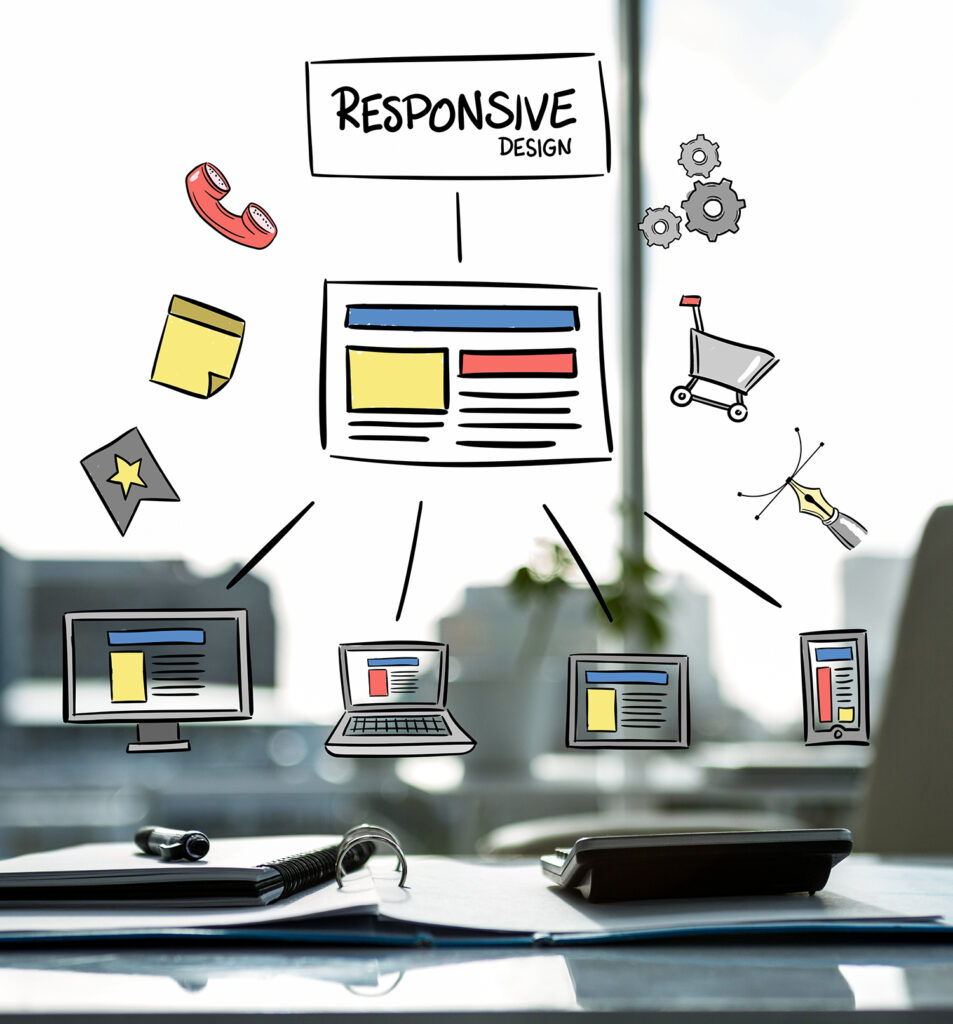
Design execution should then reflect brand positioning and user intent. Good design is clear, consistent, and commercially useful. It makes information easier to absorb and actions easier to complete. It should also account for responsiveness across desktop and mobile, because a site that works well only on one screen size is not fit for business use.
A reliable website designer should also work closely with development realities. Some designs look attractive in static files but become impractical when built. Others ignore speed, content scalability, or backend management. A business website needs a design system that can be implemented properly, updated over time, and supported without constant rework.
Website designer priorities that affect results
Several design decisions have a direct business impact, even if they are not always obvious at first.
The first is clarity. Visitors should understand who you are, what you offer, and what to do next within seconds. If that message is buried under vague headlines or distracting layouts, inquiries drop.
The second is trust. Businesses are judged quickly online. Design quality, brand consistency, proof points, and content organization all influence credibility. If your website feels dated, incomplete, or hard to use, prospects may question your reliability before speaking to your team.
The third is conversion flow. Strong design supports action. That may mean inquiry forms in the right places, clear service explanations, fast contact options, or landing pages tailored for campaigns. Design that ignores this usually produces traffic without enough results.
The fourth is maintainability. A website should be easy to update as your business evolves. If every content change requires technical intervention, your site becomes a bottleneck instead of an asset.
How website design connects with marketing and operations
Many companies still treat website design as a one-off project. In practice, the website often sits at the center of a wider digital system. It supports SEO, paid campaigns, social traffic, lead capture, email activity, customer communication, and brand presentation. It may also connect with hosting, domain services, productivity tools, and ongoing maintenance.
That is why execution quality matters beyond launch day. If your website designer does not account for search structure, analytics, page speed, or future campaign needs, your marketing performance may suffer later. If hosting and support are handled separately without coordination, downtime and technical issues become harder to resolve.
For this reason, many businesses prefer working with a single digital partner that can manage design, development, infrastructure, and growth support together. A provider like SWOT fits this model by helping businesses centralize website design, custom development, digital marketing, hosting, and support in one managed relationship. For decision-makers, that structure is often more efficient than piecing together separate specialists.
How to choose the right website designer for your business
The right choice depends on scope, internal capacity, and business ambition. If your goal is simply to publish a basic company presence, a lighter approach may work. If your website is expected to generate leads, support campaigns, reflect a serious brand image, and evolve over time, you need a partner with broader capability.
Ask practical questions. How does the provider approach discovery and planning? Can they support custom functionality if needed? Do they understand SEO and conversion principles? Who handles maintenance after launch? Can they support related services such as hosting, branding, paid campaigns, or content updates?
You should also pay attention to how they talk about outcomes. A strong provider will not focus only on visuals. They will discuss usability, performance, scalability, and business goals. That is usually a sign that they understand website design as part of a commercial ecosystem rather than a standalone creative task.
A website should make your business easier to trust, easier to contact, and easier to choose. That is the standard worth holding your website designer to.