
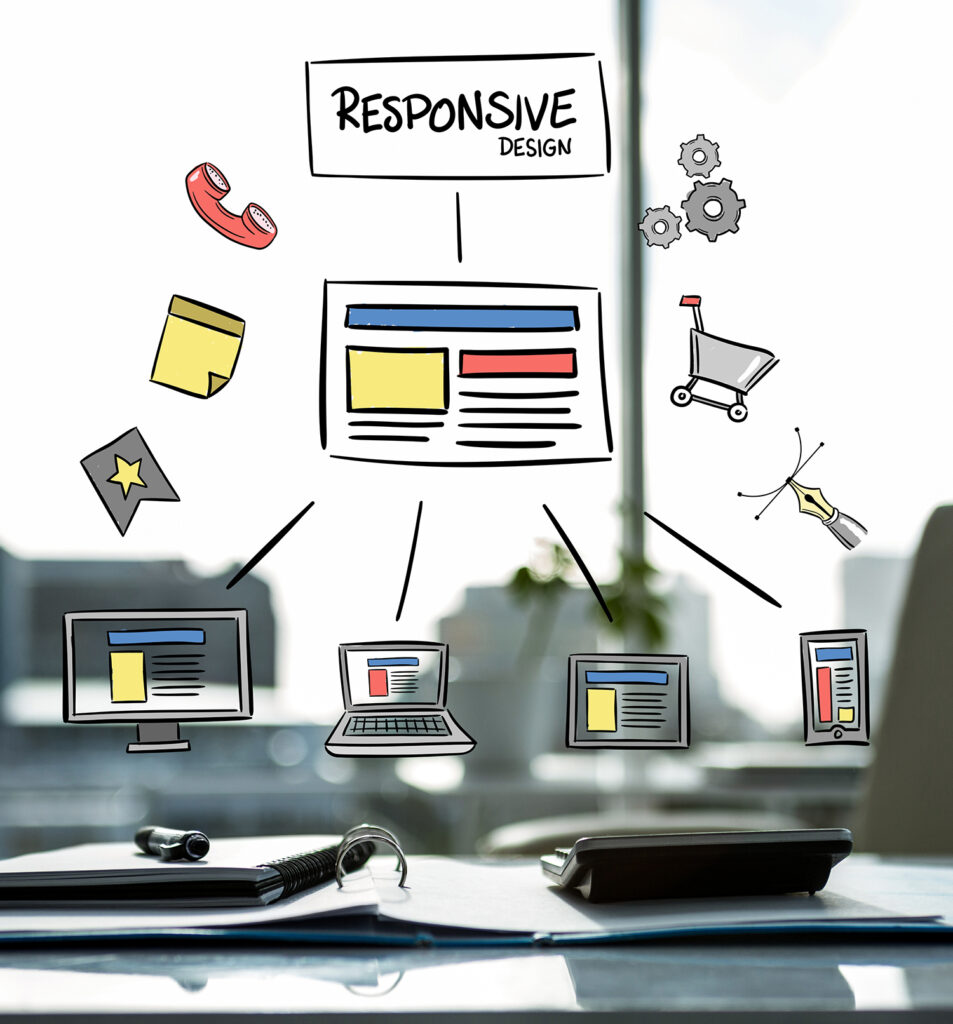



A website redesign is often triggered by a visual problem: the site looks dated, feels difficult to update, or no longer reflects the quality of the business. Those are valid concerns, but appearance alone is not a sufficient reason to rebuild. For a business, the real question is whether the current website is helping people understand the offer, trust the company, and take the next step.
A successful redesign treats the website as a commercial asset. It should support lead generation, sales conversations, customer service, recruitment, campaign activity, and brand credibility. That requires more than selecting a modern template. It requires clear decisions about audience, content, user experience, technology, and performance measurement before design work begins.
A Website Redesign Is a Business Decision
The strongest projects begin with a defined business case. A company may need better-quality inquiries, a clearer positioning for a new market, faster page performance, an e-commerce platform that can handle more orders, or a website that marketing teams can update without relying on developers. Each goal affects the scope of work.
Without that clarity, redesigns can become expensive visual exercises. The new site may look polished yet retain the same unclear navigation, weak calls to action, outdated content, and low conversion rate. A modern interface cannot compensate for a confusing proposition or a slow response process once a lead submits an inquiry.
Start by reviewing what the existing site is doing now. Look at traffic sources, top landing pages, conversion paths, search visibility, form completion rates, mobile behavior, and sales feedback. Analytics reveal where visitors leave. Your sales team can explain the questions prospects ask before they are ready to engage. Together, these inputs identify the problems worth solving.
It also helps to define success in commercial terms. For one business, success may be more qualified consultation requests. For another, it may be online purchases, demo bookings, distributor applications, or a reduction in support calls. Set baseline figures before the project starts so that the redesign can be assessed after launch rather than judged only by internal opinion.
Set the Strategy Before the Visual Direction
A website needs to speak to specific audiences with specific needs. A startup seeking investor confidence has different requirements from an established manufacturer pursuing regional distributors. A service company selling complex, high-value work needs more explanation and proof than a retailer promoting a limited-time offer.
Define the primary audience first, then identify the action that matters most for each key page. Homepages often have several jobs, but they should still establish who the business serves, what it delivers, and why it is credible within seconds. Service pages should answer practical buying questions. Contact pages should remove friction rather than simply display an email address.
Positioning must be carried consistently through the site. If a company claims to provide tailored solutions, its copy, case examples, service pathways, and inquiry form should support that claim. Generic statements about quality and innovation do not create differentiation unless they are backed by relevant evidence.
Build around the buyer journey
Not every visitor is ready to buy immediately. Some are comparing providers, some are researching a problem, and some have been referred by a trusted contact and want confirmation that the business is credible. The redesigned website should provide a logical path for each stage.
Early-stage visitors may need educational content and a concise explanation of the business. Evaluating buyers need service details, project examples, process information, technical capabilities, and proof of reliability. Ready-to-engage visitors need a clear route to request a quote, book a consultation, call the team, or make a purchase.
This does not mean every page needs multiple competing calls to action. It means the site architecture should anticipate why people arrive and give them a sensible next step. Focus matters. A page that asks visitors to subscribe, download, follow social accounts, request pricing, and browse five unrelated services is unlikely to perform well.
Design the Experience Around Clarity
Good UI and UX design reduce effort. Visitors should be able to scan a page, understand the value proposition, find relevant information, and complete an action without guessing where to click. This is particularly important for mobile users, who may be researching between meetings or comparing several suppliers from a phone.
Navigation should reflect how customers think, not how the company is organized internally. A business may have separate teams for strategy, development, hosting, and marketing, while a prospect simply wants to know whether one provider can deliver a complete digital solution. Grouping services around customer needs can make the offer easier to understand.
Visual design plays an essential role in trust. Consistent typography, spacing, imagery, color use, and component behavior signal professionalism. But visual impact should not come at the expense of readability or loading speed. Heavy animation, auto-playing video, and oversized image files can make a site feel impressive in a presentation while frustrating real users.
Accessibility should also be part of the design standard. Legible text, sufficient color contrast, descriptive labels, logical heading structure, and keyboard-friendly controls help a wider audience use the website. They also improve quality and reduce avoidable usability barriers.
Protect Technical Performance During the Redesign
A redesign is the right time to address technical issues that have accumulated over years of updates. The new website should be responsive, secure, stable, and practical to maintain. The appropriate platform depends on the business model, internal resources, integrations, and future plans.
A straightforward corporate site may benefit from a flexible content management system that allows teams to publish updates efficiently. An e-commerce business may require inventory, payment, shipping, customer account, and marketing automation integrations. A company with unique workflows may need custom development. The right answer depends on operational requirements, not on which technology is currently popular.
Performance deserves particular attention. Slow pages can reduce engagement, weaken conversion rates, and create poor first impressions. Optimize images, avoid unnecessary scripts, use reliable hosting, and test key pages across common devices and browsers. Security measures, backups, software updates, and monitoring should be agreed upon before launch, not treated as optional afterthoughts.
For businesses that depend on organic search, protect existing SEO value throughout the project. Retain high-performing page topics where appropriate, map old URLs to relevant new pages, preserve essential metadata, and avoid removing useful content without a replacement plan. A redesign can strengthen search performance, but a careless migration can reduce rankings and traffic.
Treat Content as Part of the Build
New design layouts often expose an uncomfortable truth: the existing website content is unclear, repetitive, or no longer accurate. This is not a minor detail. Content determines whether visitors understand the offer and whether search engines can interpret the page's relevance.
Prioritize the pages that influence revenue and credibility: the homepage, core service pages, product or solution pages, about page, case studies, and contact paths. Write in direct language. Explain the business problem, the service provided, the process, and the expected outcome. Add proof where it is available, such as project experience, certifications, industry expertise, client results, or operational capabilities.
Avoid copying old text into a new layout simply to fill space. If the business has changed direction, expanded its services, entered new markets, or refined its target audience, the content should reflect that shift. A redesign is an opportunity to align the website with the company the business is becoming, not just the version it used to be.
Choose a Partner That Can Support the Full Project
A website project involves interconnected decisions. Branding affects design. Content affects SEO. Development choices affect performance and maintenance. Hosting affects reliability. Marketing activity affects landing page and analytics requirements. When these areas are handled in isolation, the business often spends more time coordinating vendors than improving results.
The right agency partner should ask commercial questions before proposing pages and features. It should explain trade-offs clearly, provide a realistic scope, establish responsibilities for content and approvals, and plan for testing and post-launch support. Competitive pricing matters, but the lowest quote can become costly if it excludes migration, training, technical testing, analytics setup, or ongoing maintenance.
A dependable partner will also define how the project moves from discovery to design, development, quality assurance, launch, and support. This creates accountability and gives stakeholders visibility into decisions that affect budget, timing, and business outcomes.
Launch With Measurement, Not Assumptions
Launching the redesigned website is the start of its working life, not the finish line. Before release, test forms, conversion events, mobile layouts, browser compatibility, redirects, search indexing controls, and page speed. Confirm that inquiry emails reach the right people and that internal teams know how to respond promptly.
After launch, monitor the measures established at the beginning. Review traffic quality, rankings, engagement, form submissions, sales inquiries, shopping behavior, and technical errors. Some improvements will be immediate, while others require time and continued optimization. A website performs best when it is treated as an active business channel with regular updates, not a brochure that is left unchanged for years.
The most valuable redesign is not the one that earns the most internal compliments. It is the one that makes it easier for the right customers to choose your business, gives your team a dependable platform for growth, and continues to improve as market needs change.