


A slow, outdated website does more than look unprofessional. For many businesses, it quietly weakens trust, wastes ad spend, and gives potential customers a reason to contact a competitor instead. That is why SME website design Malaysia businesses invest in should never be treated as a cosmetic project. It is a commercial asset that needs to support visibility, credibility, and conversion.
For startup founders, SME owners, and marketing managers, the real question is not whether a website is needed. The question is whether the website is built to help the business grow. A modern site should make your company easier to find, easier to trust, and easier to engage.
What SME website design in Malaysia should actually deliver
A business website has a job to do. It should present your brand clearly, explain your services without confusion, and guide visitors toward an action such as sending an inquiry, calling your team, requesting a quotation, or making a purchase.
That sounds straightforward, but many SME websites fall short because they are built around appearance alone. Good visuals matter, but they are only one part of the outcome. A website that looks polished but loads slowly, ranks poorly, or frustrates users on mobile will underperform where it matters most.
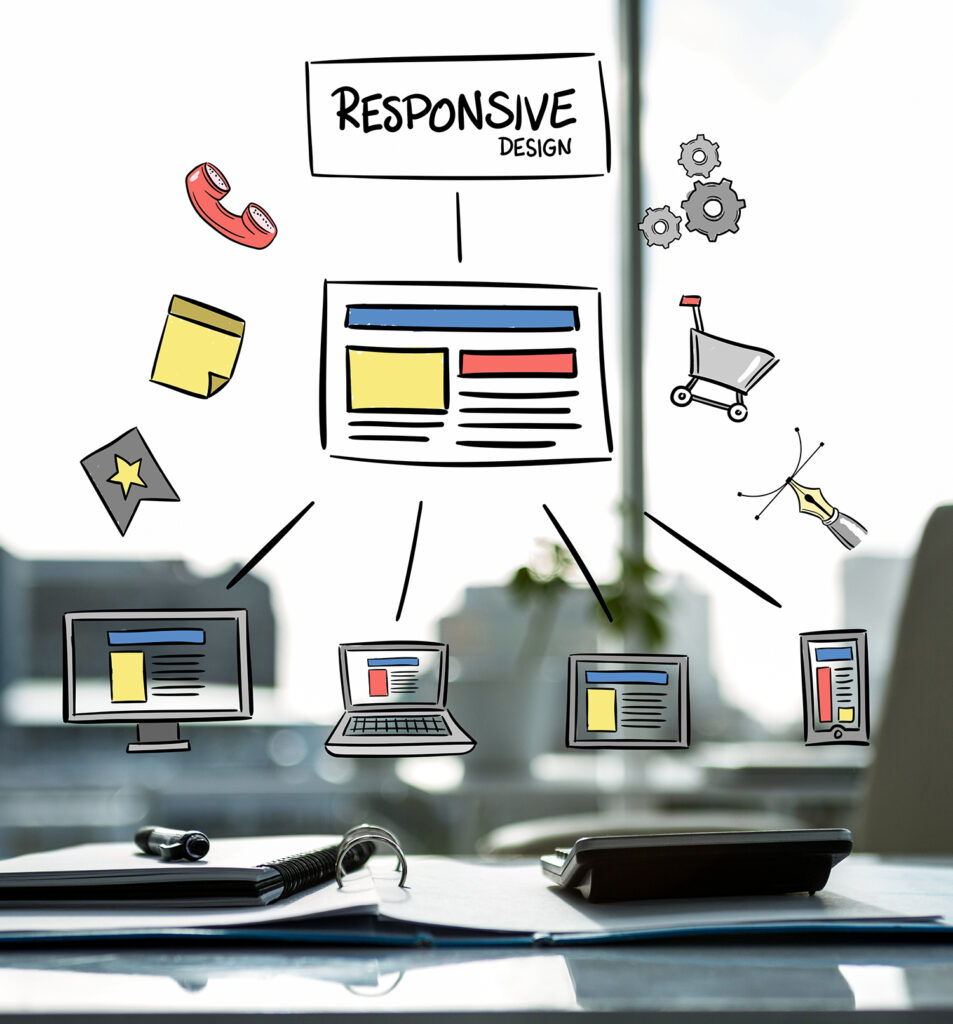
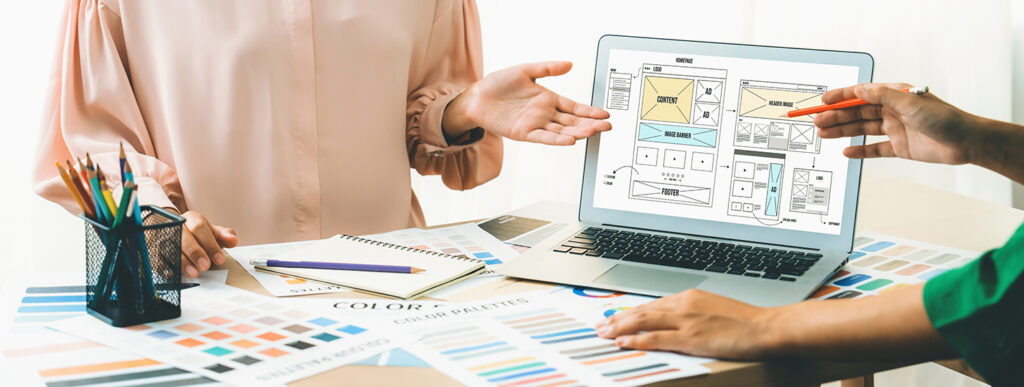
Effective SME website design in Malaysia should balance five areas. It needs strong brand presentation, a clear user journey, responsive performance on mobile devices, search-friendly structure, and dependable technical support after launch. If one of these is missing, the website often becomes a brochure rather than a business tool.
Why many SME websites underperform
The common problem is not that businesses do not care about quality. It is that website projects are often fragmented. One vendor handles design, another manages hosting, another works on SEO, and no one is fully responsible for the end result.
That setup creates delays, misalignment, and avoidable costs. If your pages are attractive but your hosting is unstable, performance suffers. If your developer launches the site without considering SEO structure, your marketing team starts from behind. If no one maintains the website after launch, security and compatibility issues begin to build.
This is where an integrated approach makes commercial sense. When strategy, design, development, hosting, and digital marketing are aligned from the start, the website is more likely to support measurable outcomes instead of becoming another disconnected business expense.
The commercial value of better SME website design Malaysia projects
A better website changes how your business is perceived before your team speaks to a prospect. It can help a smaller company appear more established, make a technical service easier to understand, and shorten the decision process for customers comparing multiple providers.
For service-based SMEs, the website often acts as the first filter. Prospects will judge professionalism, capability, and reliability based on what they see in the first few seconds. Clear messaging, trust signals, relevant case presentation, and visible contact pathways can significantly improve lead quality.
For product-driven businesses, the stakes are just as high. The website needs to support browsing, product discovery, mobile usability, payment flow, and post-purchase confidence. A weak user experience does not just reduce conversion. It can also affect repeat business and customer satisfaction.
There is also the issue of operational efficiency. A well-planned site can reduce repetitive inquiries, organize product or service information more effectively, and support marketing campaigns without forcing your internal team to patch things manually. That matters for SMEs where time and manpower are limited.
What to prioritize before starting a website project
Before design begins, the business objective needs to be clear. Some SMEs need lead generation. Others need e-commerce capability, recruitment support, or a stronger corporate profile for B2B credibility. These goals shape the structure, features, and content requirements.
This is where many businesses make an expensive mistake. They ask for pages and features before defining outcomes. If the goal is lead generation, the website should be planned around inquiry flow, service clarity, landing page structure, and conversion points. If the goal is e-commerce, the focus shifts toward catalog logic, checkout experience, and order management.
Budget also needs realistic framing. A low-cost website may seem attractive at the start, but the trade-off can be limited scalability, weak performance, generic design, and little support after deployment. On the other hand, not every SME needs a highly customized platform from day one. It depends on the business model, growth plans, and operational complexity.
A dependable agency should be willing to advise on what is necessary now, what can be phased later, and where customization will create genuine business value.
Core elements that make a business website perform
The first is clarity. Visitors should understand what your business does, who it serves, and why they should trust you within seconds. Confusing headlines, generic stock messaging, and cluttered page layouts weaken confidence immediately.
The second is mobile usability. In Malaysia, a large share of business traffic comes from mobile devices. If your site is hard to navigate on a phone, loads inconsistently, or buries important actions, you are likely losing opportunities before the sales conversation even begins.
The third is search readiness. SEO is not something to bolt on after the build. Site structure, page hierarchy, metadata planning, speed, and content layout all affect how discoverable your website becomes. Even businesses planning to run ads should care about this, because paid traffic converts better when landing pages are structured well.
The fourth is technical reliability. Secure hosting, stable uptime, proper backups, and maintenance support are not secondary concerns. They protect your digital presence and reduce disruptions that affect credibility and lead flow.
The fifth is scalability. A website should be built with future business needs in mind. You may start with corporate pages and inquiry forms, then later add campaign landing pages, multilingual support, e-commerce features, or system integrations. A short-term build that cannot adapt often costs more over time.
Choosing a website partner instead of just a web vendor
For SMEs, choosing a website provider is really about choosing accountability. If your agency only delivers design files or a basic launch and then steps away, your internal team is left coordinating updates, marketing alignment, hosting issues, and future improvements.
A stronger model is to work with a partner that can support the full digital lifecycle. That includes planning, UI and UX design, development, content support, hosting, maintenance, and performance-focused marketing. The advantage is not just convenience. It is consistency.
When one partner understands your business objectives and manages the moving parts together, decisions become faster and execution becomes more reliable. You are also less likely to face the common handover problems that happen when vendors work in silos.
This is why many businesses in Malaysia look for agencies that can handle both front-end presence and back-end digital operations. SWOT, for example, operates in this integrated model, combining website execution with hosting, cloud tools, maintenance, and digital marketing support. For SME decision-makers, that structure reduces coordination burden and keeps responsibility clear.
How to evaluate whether your current website needs a rebuild
Not every website needs to be replaced immediately. Sometimes targeted improvements are enough. But if your site looks dated, performs poorly on mobile, lacks conversion pathways, or is difficult to update, a rebuild may be the more cost-effective option.
You should also assess whether the website still reflects your business accurately. Many SMEs evolve faster than their websites. Services change, positioning improves, and the sales process becomes more refined, but the site still speaks in broad terms from years ago. That gap affects trust.
Another sign is marketing friction. If your team is running SEO campaigns, Google Ads, social promotions, or email marketing, but the website cannot support landing pages, tracking, or conversion-focused content, the problem is no longer cosmetic. It is affecting return on investment.
A practical standard for SME website design Malaysia businesses can use
A good website should make three things happen. It should represent your brand professionally, support your commercial objectives, and remain stable after launch. If it cannot do all three, it is not solving the business problem.
That is the standard worth using when reviewing agencies, budgets, and proposals. Ask how the site will support lead generation or sales. Ask who will handle hosting and maintenance. Ask how SEO, performance, and future scalability are being considered. A professional website project should answer business questions, not just design questions.
For SMEs in competitive sectors, the website is often one of the few digital assets fully under your control. Social platforms change, ad costs rise, and marketplace visibility can fluctuate. Your website remains the core environment where your brand, message, and conversion path can be shaped around your goals.
A well-built site will not fix every growth challenge on its own. But it gives your business a stronger foundation to market with confidence, operate more efficiently, and compete more credibly. That is what a serious digital presence should do.