
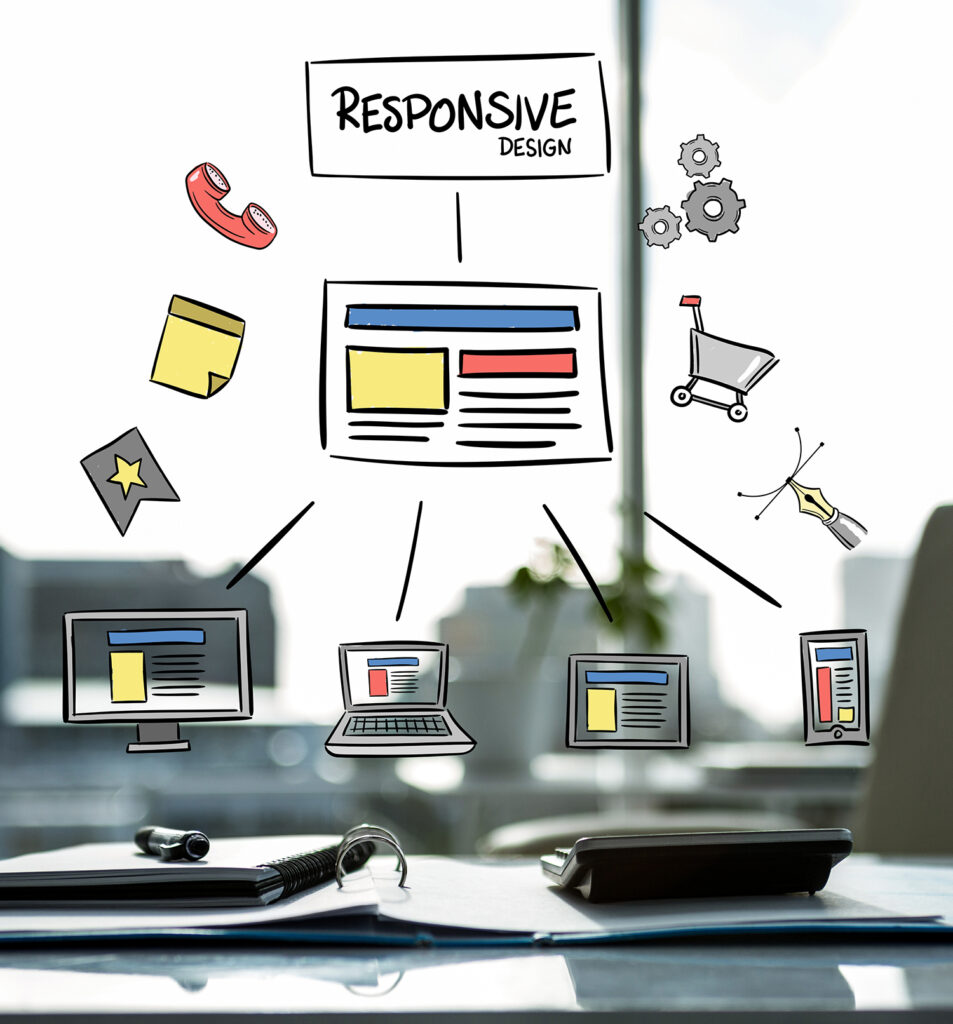



A website can look polished and still fail to support the business. Slow loading, unclear service pages, weak mobile usability, difficult updates, and missing lead tracking can turn a significant investment into little more than an online brochure. Choosing a Singapore website design company should therefore be a commercial decision, not simply a visual one.
For founders, marketing teams, and corporate stakeholders, the right partner should understand what the website needs to achieve: generate qualified inquiries, support e-commerce sales, establish brand credibility, improve campaign performance, or simplify operations. Design matters, but it is only one part of a website that performs reliably after launch.
Start With Business Goals, Not a Design Gallery
Most agencies can show attractive homepage concepts. Fewer can explain how a design decision supports conversion, search visibility, content management, customer journeys, or future integrations. Before reviewing proposals, define the specific role your website must play in the business.
A B2B company may need a structured lead-generation website with service pages, case studies, clear calls to action, and CRM-ready forms. A retailer may need product filtering, secure checkout, inventory integration, shipping rules, and abandoned-cart recovery. A corporate group may need multilingual content, stakeholder approval workflows, investor information, and stronger governance around hosting and access.
These requirements influence scope, platform choice, timeline, and cost. They also determine whether an agency is genuinely suitable. A visually focused studio may be an appropriate choice for a small brand refresh, while a more complex project requires a partner that can manage UI/UX, development, infrastructure, integrations, and ongoing support.
When speaking with a prospective agency, provide context beyond pages and features. Explain your audience, sales process, internal team capacity, growth plans, existing systems, and the outcomes management expects. Better inputs lead to a more accurate recommendation and reduce costly changes later.
What a Singapore Website Design Company Should Evaluate
A dependable agency should ask questions before proposing a solution. If a proposal arrives quickly with a fixed price but no discovery process, it may be based on assumptions rather than your actual needs.
User experience and conversion paths
Visitors should understand what the business offers, why it is credible, and what to do next within seconds. This requires more than large banners and attractive colors. It requires clear information architecture, readable content, logical navigation, responsive layouts, and calls to action placed where users need them.
Ask how the agency approaches wireframes, user journeys, mobile design, accessibility, and conversion optimization. The answer should show a method, not just a preference for a particular visual style. For example, a professional services firm may benefit from inquiry forms tailored to service categories, while a high-consideration product may need comparison tools, specifications, and downloadable resources.
Technical foundation and ownership
The technology behind a website affects security, speed, update costs, and flexibility. A custom-built platform can be justified when workflows or integrations are highly specific. For many SMEs, however, a well-configured content management system or e-commerce platform is faster to deploy and easier for internal teams to manage.
The right choice depends on operational needs, not on the agency's preferred stack. Ask who owns the domain, hosting account, source files, analytics access, and platform licenses. You should also understand whether the site can be maintained by another provider if circumstances change. Clear ownership protects the business and prevents avoidable dependency.
Search, measurement, and marketing readiness
A new website should be prepared to support marketing from day one. That means technical SEO fundamentals, page-level metadata controls, logical URL structures, image optimization, fast performance, and analytics configuration. Paid advertising and social campaigns also require landing pages that load quickly and match the message that brought visitors there.
Measurement should be planned before launch. Define what counts as a conversion, whether that is a submitted form, a phone call, a quote request, a checkout, or a booked consultation. Without reliable tracking, it becomes difficult to judge whether design and marketing investments are producing commercial results.
Hosting, security, and continuity
Hosting is often treated as an afterthought until a website becomes unavailable or is compromised. A serious proposal should address hosting specifications, SSL certificates, backups, software updates, uptime monitoring, malware protection, and recovery procedures.
Businesses that collect customer data, accept payments, or rely heavily on online lead generation should take this especially seriously. The lowest hosting price is rarely the best value if response times are slow, backup responsibilities are unclear, or support is unavailable when an issue occurs. A stable digital presence depends on both front-end design and back-end accountability.
How to Compare Proposals Fairly
Do not compare website proposals by total price alone. One quote may include strategic discovery, copy guidance, UI/UX design, development, testing, SEO setup, training, hosting, and post-launch support. Another may cover only a template implementation with a limited number of pages. The figures can look comparable while the deliverables are materially different.
Review each proposal against the same criteria: project scope, number of page templates, design revisions, content responsibilities, required integrations, timeline, testing process, training, launch support, and ongoing maintenance. Confirm whether third-party software, premium plugins, stock assets, payment gateway costs, or content migration are included.
A lower-cost project can be the right decision when requirements are simple and time to market matters most. However, under-scoping a site that must support multiple teams, campaigns, or markets often creates higher costs after launch. The objective is not to buy the most expensive website. It is to invest in the level of capability the business actually needs.
Look Beyond the Launch Date
Website projects do not end when the site goes live. Content changes, security updates, campaign landing pages, feature improvements, and performance reviews continue long after launch. The agency's post-launch model is therefore as important as its design portfolio.
Ask how support requests are handled, what service levels apply, who manages updates, and whether maintenance plans include reporting or proactive recommendations. Also ask how the team communicates during the project. Reliable delivery depends on clear milestones, named points of contact, approval processes, and transparent handling of change requests.
For organizations without a large internal digital team, an integrated agency relationship can reduce friction. Working with one provider for web design, development, hosting, SEO, paid campaigns, and business productivity tools can improve accountability and reduce the time spent coordinating separate vendors. This approach is particularly valuable when campaigns, website updates, and lead handling need to work together.
Choose Evidence Over Promises
Strong agencies do not need vague claims to demonstrate their value. Ask to see relevant work, but assess it with business questions. Is the website easy to navigate? Does it communicate a clear value proposition? Does it load well on mobile? Is there a purposeful path toward inquiry or purchase? Are the content and calls to action aligned with the audience?
Client experience also matters. Look for evidence of delivery reliability, long-term relationships, and the ability to support organizations after the initial build. A good agency should be comfortable explaining trade-offs, identifying risks, and recommending a phased approach when a full scope is not necessary at the outset.
SWOT supports businesses that need this broader view, combining website design and development with hosting, digital marketing, and ongoing technical support. The goal is not simply to launch a better-looking website, but to build a digital asset that supports measurable business activity.
The best choice is a partner that can connect commercial priorities to practical execution. Select the team that asks the right questions, defines scope clearly, protects your operational interests, and remains accountable when the website begins doing the real work of representing your business.