
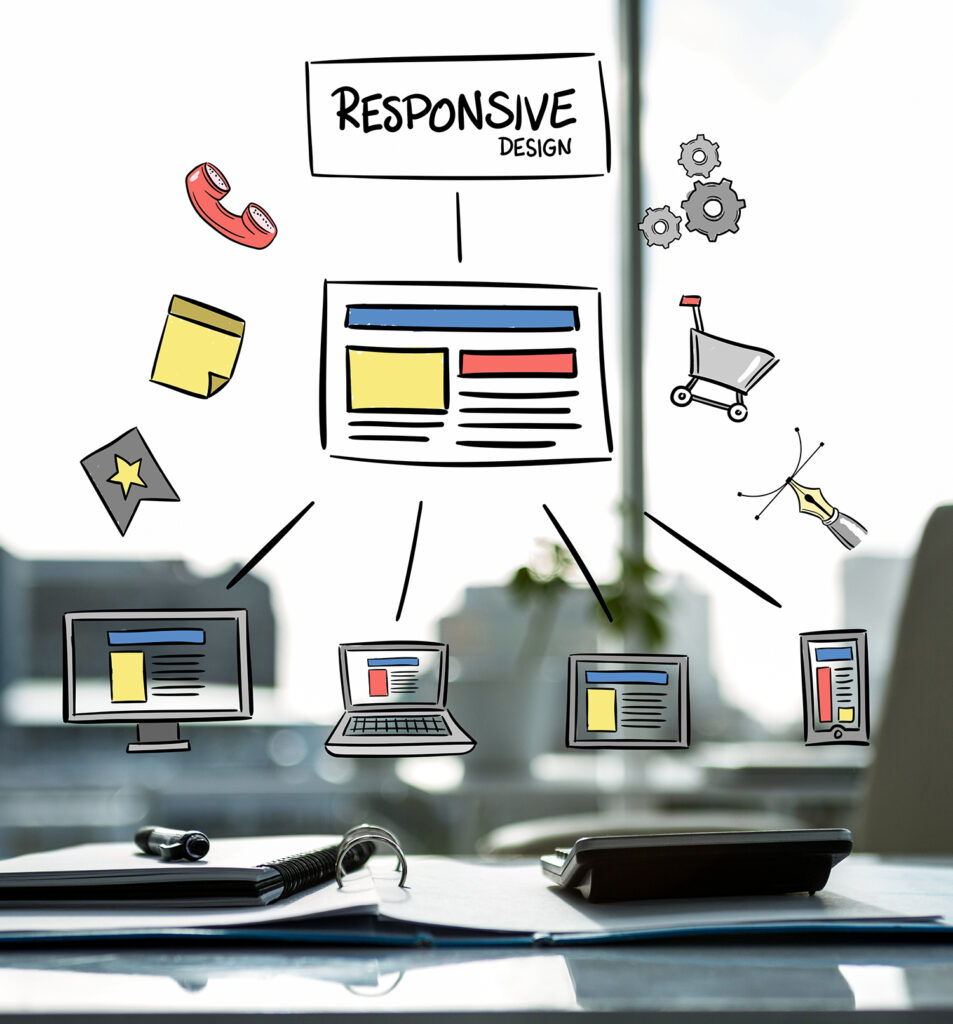



A business website in Kuala Lumpur has a short window to prove itself. Decision-makers click, scan, compare, and move on fast. That is why web design KL is not simply a branding exercise. It is a commercial asset that needs to build trust quickly, communicate value clearly, and support real business outcomes such as lead generation, inquiries, bookings, and sales.
Many companies still treat website design as a one-off creative project. The result is often a polished homepage with weak structure underneath. It may look current for a while, but it does not rank well, convert consistently, or support marketing activity across SEO, ads, social campaigns, and email. For businesses that want measurable returns, the better approach is to view web design as part of a larger digital system.
What businesses should expect from web design KL
In a competitive market like Kuala Lumpur, a website has to do more than present information. It needs to support how buyers evaluate your business. That means clear positioning, fast page performance, mobile-first layouts, persuasive content, strong calls to action, and a backend that your team can actually manage.
For startups, that may mean launching quickly with a professional site that establishes credibility and captures early leads. For SMEs, it often means upgrading from an outdated site that no longer reflects the company’s current service quality. For larger organizations, the requirement is usually broader – stronger UX, better content architecture, tighter security, and integration with internal workflows or marketing systems.
The best web design KL projects start with business intent. Are you trying to generate more qualified inquiries? Support a sales team? Improve conversion from paid traffic? Strengthen confidence among corporate buyers? The answers shape the sitemap, user journey, design priorities, content strategy, and technical build.
Good web design is visible. Great web design performs.
A visually attractive website is useful, but appearance alone is not enough. Business websites need to remove friction. Visitors should understand who you are, what you offer, why you are credible, and what they should do next without having to work for it.
This is where many projects fall short. Companies focus heavily on banners, animations, and visual trends while neglecting conversion structure. A homepage becomes crowded with generic statements. Service pages stay too broad. Contact forms ask for too much or too little. Mobile usability gets checked late instead of being considered from the start.
A high-performing site usually feels simpler, not more complex. Navigation is intuitive. Messaging is direct. Every page has a purpose. Load times are controlled. Content is written for real buyers, not internal stakeholders trying to say everything at once. These details may seem small individually, but together they shape whether a website works as a business tool or just sits online.
The balance between branding and conversion
There is always a trade-off between visual expression and commercial clarity. Some brands need a stronger visual layer because perception is central to the sale. Others benefit from a more restrained approach that prioritizes speed, readability, and trust signals.
It depends on the business model. A luxury brand, a B2B engineering company, and an e-commerce store should not look or behave the same way. Effective design is tailored, not copied from a trend. The right choice is the one that helps your audience make decisions with confidence.
Why one-provider execution matters
One of the most common problems in digital projects is fragmentation. A company hires one party for design, another for development, another for hosting, and another for SEO or ad campaigns. When performance issues appear, accountability becomes unclear. Everyone can identify the problem, but no one fully owns the solution.
A more reliable model is to work with a provider that can handle strategy, design, development, hosting, marketing support, and ongoing maintenance under one structure. That reduces handover gaps, speeds up troubleshooting, and creates better alignment between the website and the campaigns driving traffic to it.
This matters after launch just as much as before it. A website is not finished the day it goes live. Content updates, security patches, landing pages, performance improvements, and tracking setup all affect long-term results. Businesses that consolidate these services with a dependable digital partner usually move faster and waste less time coordinating vendors.
What to look for in a web design KL partner
Choosing a web design agency should not come down to price alone. Cost matters, but so does execution reliability. A low-cost site that fails to convert, breaks under traffic, or requires repeated fixes is rarely the cheaper option over time.
Look at how the agency thinks about business goals. Do they ask about your target audience, sales process, and conversion points? Do they understand the difference between a brochure website and a lead-generation platform? Can they advise on SEO structure, content flow, hosting requirements, and maintenance planning? If they only discuss color schemes and layouts, the scope may be too narrow.
A capable partner should also be able to explain trade-offs clearly. For example, a custom build offers more flexibility but may take longer and cost more than a templated approach. An e-commerce site may need stronger product filtering, logistics integration, and campaign landing pages. A corporate website may need approval workflows, multilingual support, or more advanced security controls. These are not side issues. They affect timeline, cost, and long-term manageability.
Questions worth asking before you commit
Ask how the project will be scoped, what content support is included, how revisions are handled, and what happens after launch. Ask who manages hosting, backups, email-related configuration, and technical support. Ask how analytics and conversion tracking will be set up. Ask whether the site is built with future SEO and campaign expansion in mind.
The quality of the answers often tells you more than the portfolio does.
Web design KL and digital marketing should work together
A website cannot carry business growth alone. It works best when connected to a broader digital strategy. SEO brings organic visibility. Google Ads captures high-intent searches. Social campaigns create awareness and retargeting opportunities. Email and WhatsApp communication help move leads forward. But every one of these channels depends on where traffic lands.
If the website is slow, confusing, outdated, or misaligned with the campaign message, marketing spend becomes less efficient. This is why website planning should include future traffic strategy from day one. Service pages should support search demand. Landing pages should match ad intent. Forms should be designed around follow-up processes. Content should answer commercial questions, not just fill space.
For many businesses, the strongest value comes from treating the website as the center of a wider digital operation. That is where an integrated provider can create an advantage. When web development, SEO, paid ads, branding support, and hosting are coordinated properly, each element strengthens the others. SWOT operates in this model because business clients usually need more than a website – they need an execution partner that can connect the full digital picture.
The hidden cost of outdated websites
A website does not need to be obviously broken to be underperforming. Sometimes the problem is slower than competitors. Sometimes it looks credible on desktop but feels difficult on mobile. Sometimes the brand has evolved but the messaging has not. Sometimes there is traffic, but no clear path to inquiry.
These gaps create silent losses. Prospects leave without contacting you. Ad traffic costs more to convert. Sales teams spend extra time clarifying basic information that the site should already communicate. None of these issues are dramatic on their own, but together they limit growth.
That is why redesign decisions should be based on performance signals, not just aesthetics. If your current website does not reflect your business capability, support your marketing channels, or make it easy for buyers to act, redesign is not cosmetic. It is operational improvement.
A business website should reduce friction, not create it
The strongest websites usually share a simple quality: they make the next step obvious. That may be a quote request, a consultation, a purchase, a call, or a form submission. Design, content, and development all need to support that action.
For business owners and marketing teams evaluating web design KL providers, the real question is not who can build a nice-looking site. The better question is who can deliver a website that supports growth, reflects your brand properly, and remains reliable after launch.
A good website gives your business an online presence. A well-planned one helps you operate with more confidence, market with more efficiency, and convert attention into action.