
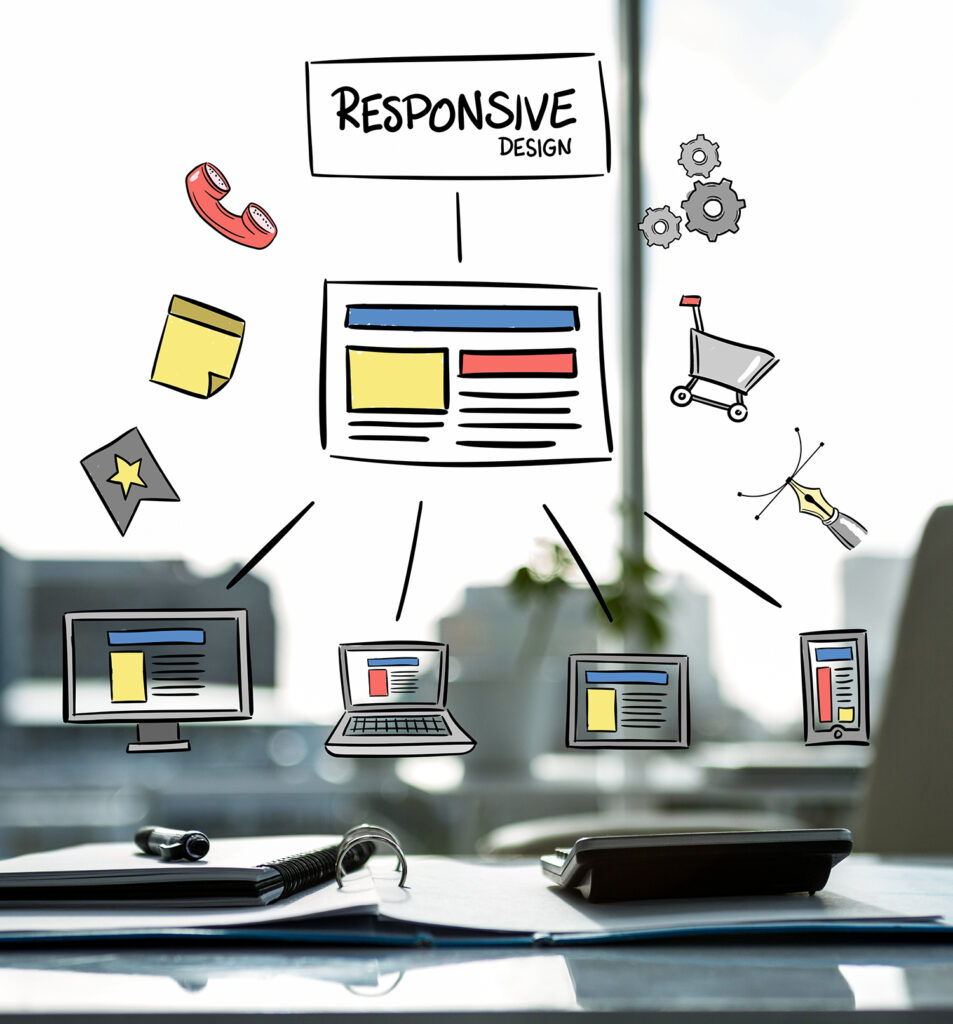



A WordPress site that looks good on launch day but breaks under daily business use is not a real asset. For companies investing in growth, wordpress website services need to go far beyond theme setup and page publishing. They should support credibility, lead generation, performance, security, and ongoing operational stability.
That distinction matters because many businesses do not actually need “just a website.” They need a platform that represents the brand properly, helps sales and marketing teams work more effectively, and can be maintained without constant friction. If the service provider only focuses on design, the business usually pays for it later in lost time, weak SEO performance, plugin conflicts, or expensive rebuilds.
What businesses are really buying with wordpress website services
At a commercial level, a WordPress project is not simply a design purchase. It is an investment in digital infrastructure. The website often becomes the center of brand presentation, inquiry generation, campaign landing pages, product promotion, recruitment, customer communication, and content publishing.
That is why business decision-makers should assess wordpress website services based on outcomes, not just deliverables. A polished homepage is useful, but it is not enough if the site loads slowly, lacks conversion paths, or is difficult to update. In practical terms, the right service should connect strategy, design, development, hosting, and support into one reliable process.
For startups, this usually means building credibility quickly while staying within budget. For SMEs, it often means replacing outdated websites with something easier to manage and stronger for lead generation. For larger organizations, the priorities may include governance, scalability, multiple stakeholder approvals, and integration with internal systems. WordPress can support all three scenarios, but the service model has to match the business requirement.
The core components of strong wordpress website services
A serious service offering usually starts with planning. This includes understanding the company’s goals, target audience, service structure, content requirements, and conversion priorities. Without this stage, websites tend to become visually acceptable but commercially weak.
The next layer is UI and UX design. Good design is not decoration. It helps users understand what the company offers, where to go next, and why they should trust the brand. For B2B companies especially, clarity beats visual excess. Navigation should be intuitive, calls to action should be visible, and page structure should support actual decision-making.
Development quality is where many projects separate themselves. WordPress is flexible, but that flexibility can be misused. Some websites are overloaded with unnecessary plugins, bloated templates, and hard-to-manage page builders. Others are custom developed too heavily, making simple updates expensive. The better approach depends on the project. A smaller company may benefit from a well-structured build using reliable components, while a more complex organization may need custom features, tailored workflows, or system integrations.
Content setup is also part of the service, whether businesses realize it or not. A website can only perform if service pages, product information, contact paths, and trust signals are presented properly. That includes formatting, messaging hierarchy, image handling, and mobile readability. Even the strongest design loses value if the content is vague or poorly organized.
Why hosting and maintenance should not be treated separately
One of the most common business mistakes is treating website development, hosting, and maintenance as unrelated purchases. In reality, they directly affect each other. A site built well but hosted poorly will still underperform. A site launched successfully but left without updates becomes a security and operational risk.
Reliable WordPress website services should therefore include a clear post-launch support structure. At minimum, businesses should expect plugin updates, core updates, backup management, uptime monitoring, malware checks, and issue resolution. If the website supports active lead generation or e-commerce, response speed matters even more. Problems that remain unresolved for days can directly affect revenue.
Hosting quality also influences user experience and search visibility. Slow servers, weak caching, poor database handling, or overloaded shared environments can reduce site speed and stability. For business users, that is not a technical side issue. It affects bounce rates, form submissions, and brand perception.
This is where working with a centralized digital partner often makes more sense than splitting responsibilities across multiple vendors. When one provider manages development, hosting, maintenance, and support, accountability is clearer and troubleshooting is faster. SWOT, for example, operates in a way that reflects this business need by combining website execution with infrastructure and ongoing digital support under one service relationship.
SEO readiness is not optional
Many companies assume SEO begins after a website goes live. That is usually too late. The structure of the site, page speed, mobile usability, heading logic, metadata, internal content organization, and URL planning all influence search performance from day one.
That does not mean every WordPress project needs an aggressive SEO campaign immediately. It does mean the website should be built in a way that does not create avoidable SEO problems. A business site should have crawlable pages, properly structured service content, image optimization, schema where appropriate, and strong technical foundations.
There is also an important trade-off here. Some providers promise fast deployment by relying on prebuilt templates with limited flexibility. That can reduce upfront cost and shorten the timeline, which may be suitable for very early-stage businesses. But template-first builds can also create layout limitations, duplicate design patterns, and weaker content differentiation. If search visibility and long-term growth are priorities, businesses should weigh short-term savings against future constraints.
E-commerce, lead generation, and custom functionality
Not every WordPress site serves the same purpose. A corporate profile site has different requirements from a lead generation website, a service marketplace, or an online store. This is why packaged services only work when they are still adaptable.
For lead-driven businesses, forms, landing pages, call tracking paths, CRM connections, and conversion-focused page design are often more important than advanced visual effects. For e-commerce, product structure, payment integration, checkout flow, shipping logic, and inventory handling become central. For companies with internal workflows, WordPress may also need to connect with booking systems, quotation tools, membership areas, or third-party platforms.
This is where tailored execution matters. If a provider treats every WordPress project as the same, the site may launch, but it will not support the business properly. Strong service delivery means understanding how the company actually operates and translating that into functional web architecture.
How to evaluate a provider before you commit
Business buyers should ask direct questions. What is included in discovery and planning? Is the site custom designed or adapted from a template? How is mobile responsiveness handled? What hosting environment is recommended and why? Who manages updates after launch? What happens if forms break, plugins conflict, or performance drops?
It is also wise to examine how the provider talks about results. If the conversation stays limited to colors, layout, and page count, the scope may be too shallow. A dependable partner will also discuss user goals, content structure, scalability, speed, maintenance, and measurable business outcomes.
Pricing should be reviewed in the same way. The cheapest quote is often missing key elements such as optimization, revision structure, migration support, security setup, analytics, or post-launch care. A higher quote is not automatically better, but transparent scope usually indicates a more reliable delivery model.
For many organizations, responsiveness and support culture matter just as much as technical skill. Websites are rarely static assets. They need updates, campaign pages, content changes, troubleshooting, and occasional feature expansion. A provider that disappears after launch creates operational friction that most businesses do not have time to manage.
The real value of an integrated service model
WordPress remains a strong platform because it is flexible, scalable, and widely supported. But the platform itself is only part of the equation. Results depend on how well the site is planned, built, hosted, optimized, and supported over time.
For business decision-makers, the smartest approach is usually not to buy isolated tasks. It is to secure a service model that covers the full digital chain – strategy, design, development, hosting, maintenance, and, when needed, marketing execution. That reduces handoff problems, improves accountability, and gives the business a clearer path from website launch to measurable growth.
The right website should not create more work for your team. It should make your business easier to trust, easier to find, and easier to engage.