



A business website is often the first serious interaction a prospect has with your company. Before they call, request a quotation, or visit your office, they assess your credibility through what they see online. The best tips for having a good website are therefore not only about attractive visuals. They are about creating a dependable sales and communication asset that makes it easy for the right customer to understand, trust, and contact your business.
For startups, SMEs, and established companies, a website should support commercial objectives. It should clarify what you offer, reinforce why clients should choose you, and give visitors a clear route to take action. Here are ten practical priorities that make the difference.
1. Start With a Clear Business Objective
A website cannot be effective if it is trying to do everything at once. Decide what success should look like before design or development begins. For many service businesses, the priority is qualified inquiries. For an e-commerce company, it may be completed purchases. A corporate site may need to strengthen credibility, support recruitment, or help distributors access product information.
This decision shapes the page structure, messaging, calls to action, and technology requirements. A visitor should quickly understand what the business does and what they should do next. If a website has no clear commercial purpose, even an expensive design can become little more than an online brochure.
2. Make Your Value Proposition Easy to Understand
Visitors do not have the patience to interpret vague statements. Your homepage should answer three questions within seconds: what do you provide, who is it for, and why should the visitor consider your business?
Avoid leading with broad phrases such as “quality solutions” without evidence or context. A more effective message connects your offering to a business outcome. For example, a company providing managed IT support should explain how it reduces downtime, strengthens security, or gives internal teams faster assistance.
Clear positioning is especially valuable when competitors offer similar services. Your difference may be industry experience, faster delivery, integrated support, certified specialists, or tailored project scope. Put that distinction where visitors will see it early.
3. Build Navigation Around Customer Decisions
Good navigation is not a catalog of every internal department. It is a guide that helps visitors find the information needed to make a decision. Keep primary menus focused on the pages that matter most, such as services, solutions, industries, portfolio or case studies, company information, and contact details.
A menu with too many choices can slow visitors down. On the other hand, an overly simplified menu can bury important pages. The right balance depends on the size and complexity of the business. A company with multiple service lines may benefit from structured dropdown menus, while a focused consultancy may need only a few clearly labeled pages.
Every important page should also provide a logical next step. Someone reading about a service should be able to request a consultation, view relevant work, or contact the team without returning to the homepage.
4. Prioritize Mobile Experience From the Beginning
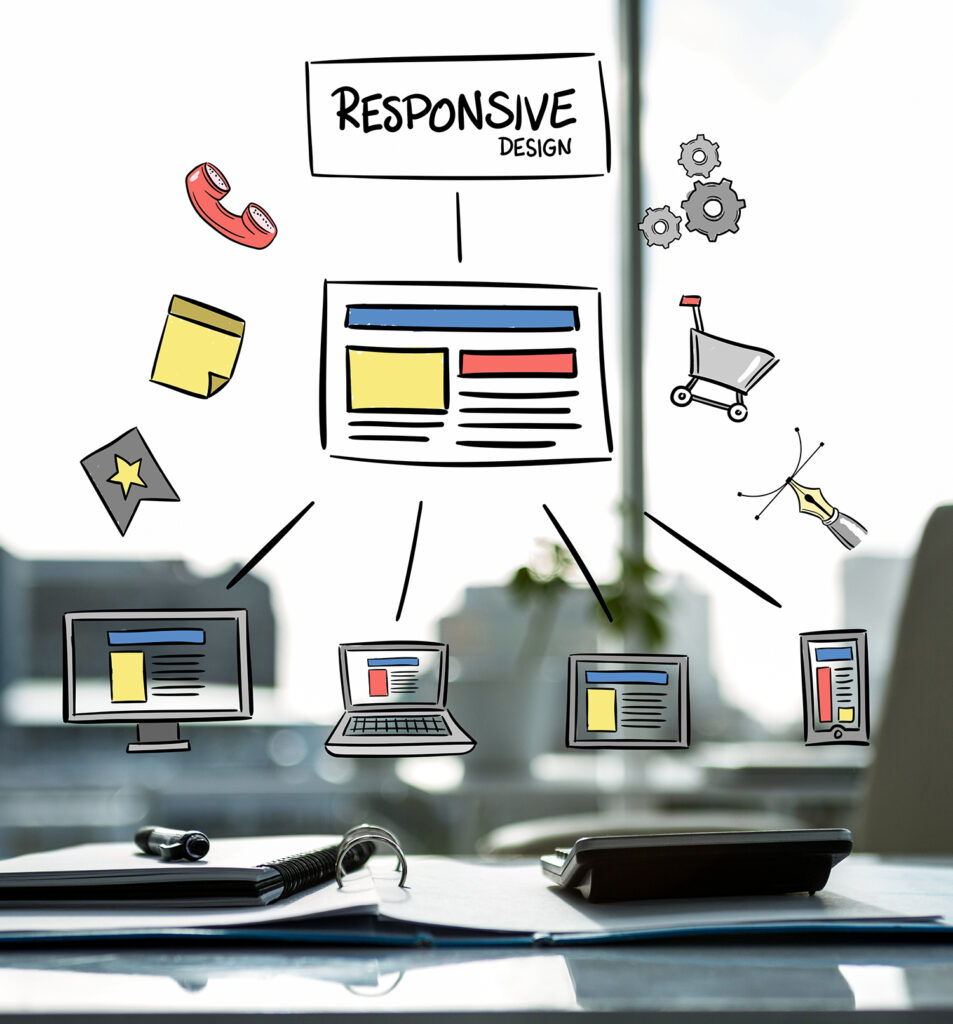
Many business prospects will first encounter your website on a phone, whether they are searching after a meeting, responding to an advertisement, or comparing suppliers outside office hours. A site that looks polished on a desktop but is difficult to use on mobile will lose opportunities.
Mobile-friendly design means more than shrinking a desktop layout. Buttons need enough space to tap accurately. Text must be readable without pinching and zooming. Forms should be short and easy to complete. Images, banners, and menus need to load and function properly on a range of devices.
Test key actions on mobile before launch. Can a visitor find a service, understand the offer, call the business, send an inquiry, or complete a purchase without friction? If not, the mobile experience needs further work.
5. Use Design to Support Trust, Not Distract From It
Professional design has a direct effect on credibility. Inconsistent fonts, poor-quality visuals, cluttered layouts, and outdated pages can make a capable company appear less established than it is. Design should create confidence through clarity, consistency, and appropriate visual standards.
That does not mean every website needs elaborate animation or a highly artistic layout. In many B2B sectors, clean structure, strong typography, real project imagery, and concise content are more persuasive than visual effects. The right approach depends on the audience. A design-led consumer brand may need stronger visual storytelling, while a corporate service provider may benefit from a more direct and information-rich format.
Use real proof wherever possible. Client testimonials, project outcomes, certifications, team expertise, awards, and recognizable operational details all help reduce the perceived risk of engaging your business.
6. Write Content That Answers Commercial Questions
Website copy should do more than fill space. It should address the concerns customers have before they contact you: What is included? Is this suitable for my business? What makes this provider reliable? How does the process work? What outcome can I expect?
Strong service pages explain the scope of work in plain language, then support the message with relevant detail. A prospective client does not necessarily need every technical specification on the first visit, but they do need enough information to determine whether the business is a suitable partner.
Avoid dense blocks of generic text. Break content into clear sections, use meaningful headings, and write for the reader’s decision process. Technical terms are appropriate when your audience expects them, but explain the business value behind the terminology.
7. Give Every Key Page a Clear Call to Action
A visitor may be interested but still leave if the next step is unclear. Calls to action should be specific, visible, and matched to the level of commitment a visitor is ready to make.
For a high-value custom service, “Request a Consultation” or “Discuss Your Requirements” may work better than a generic “Submit.” For e-commerce, the priority is naturally “Add to Cart” or “Buy Now.” Some businesses may also benefit from lower-commitment actions, such as downloading a company profile, requesting a demo, or viewing a project portfolio.
Do not place calls to action only at the bottom of a long page. Include them at logical points after key information has been presented. The goal is not to pressure visitors. It is to remove uncertainty when they are ready to proceed.
8. Improve Website Speed and Technical Reliability
A slow or unreliable site damages trust and costs leads. Visitors are less likely to wait for large images, poorly optimized scripts, or pages that fail to load properly. Search engines also consider user experience signals, making technical performance part of long-term online visibility.
Speed improvements often come from practical decisions: properly sized images, quality hosting, optimized code, efficient caching, and fewer unnecessary third-party tools. The cheapest hosting option is not always the most cost-effective if it creates slow loading times, downtime, or weak security support.
Technical reliability also includes secure forms, working buttons, valid contact information, error-free pages, and regular backups. These details may seem minor, but they influence whether a business appears prepared and dependable.
9. Build for Search Visibility Without Sacrificing Readability
Search engine optimization should be part of website planning, not an afterthought. Customers cannot engage with pages they cannot find. Each important service, product category, or location-based offering should have a purposeful page that explains the topic clearly and uses the language prospects are likely to search.
However, search visibility does not mean repeating keywords unnaturally. Content written only for rankings can sound unconvincing to real customers. The stronger approach is to create useful, well-structured pages that answer real questions, use clear headings, and establish subject expertise.
Technical SEO matters as well. Search-friendly page titles, logical URL structures, image descriptions, fast performance, and clean site architecture make it easier for search engines to understand and index the website.
10. Treat Launch as the Start of Ongoing Improvement
A website is not finished when it goes live. Customer expectations change, services evolve, campaigns create new traffic sources, and technology requires maintenance. Businesses that review their websites regularly are better positioned to identify broken journeys and conversion opportunities.
Track practical performance indicators such as inquiry volume, form completion rates, phone calls, sales, traffic sources, and the pages visitors use before contacting you. Data should guide improvements, but context matters. A lower volume of inquiries may still be positive if lead quality and contract value are increasing.
Regular maintenance also protects the investment. Update software, renew domains and security certificates, review backups, check forms, and keep service information accurate. A dependable agency partner can help coordinate development, hosting, marketing, and ongoing support so that responsibility does not fall between multiple vendors.
A Website Should Earn Its Place in Your Business
The most effective websites make a business easier to trust and easier to buy from. They combine clear positioning, practical user experience, technical reliability, and measurable conversion paths. When these elements work together, your website becomes more than a digital presence. It becomes an active business tool that supports growth long after the initial launch.