



Corporate website design services are not just about appearance
A corporate website usually starts getting attention when something goes wrong. Sales teams say the site is not helping conversations. Marketing says campaigns are sending traffic to weak pages. Leadership notices the brand looks dated next to competitors. IT is left managing a platform that no longer fits current business needs.
That is where corporate website design services become commercially valuable. The right service is not a cosmetic refresh. It is a structured process that turns a website into a working business asset – one that supports credibility, lead generation, recruitment, customer communication, and digital marketing performance.
For growing companies, established SMEs, and larger organizations, the website often sits at the center of multiple functions. It introduces the brand, supports campaigns, answers pre-sales questions, captures inquiries, and helps stakeholders assess whether your business looks capable and trustworthy. If the site underperforms, the problem reaches beyond marketing.
What businesses should expect from corporate website design services
Professional corporate website design services should solve business problems, not just deliver design files and a launch date. The service should begin with commercial objectives. That might mean generating qualified leads, improving investor or partner confidence, shortening the sales cycle, supporting multiple service lines, or creating a stronger employer brand.
A serious provider will usually assess your current website, content structure, customer journey, technical setup, and operational requirements before recommending a direction. This matters because corporate websites often carry more complexity than a typical brochure site. There may be approval workflows, multiple departments, existing brand guidelines, CRM integration needs, multilingual content, internal stakeholders, and future scalability requirements.
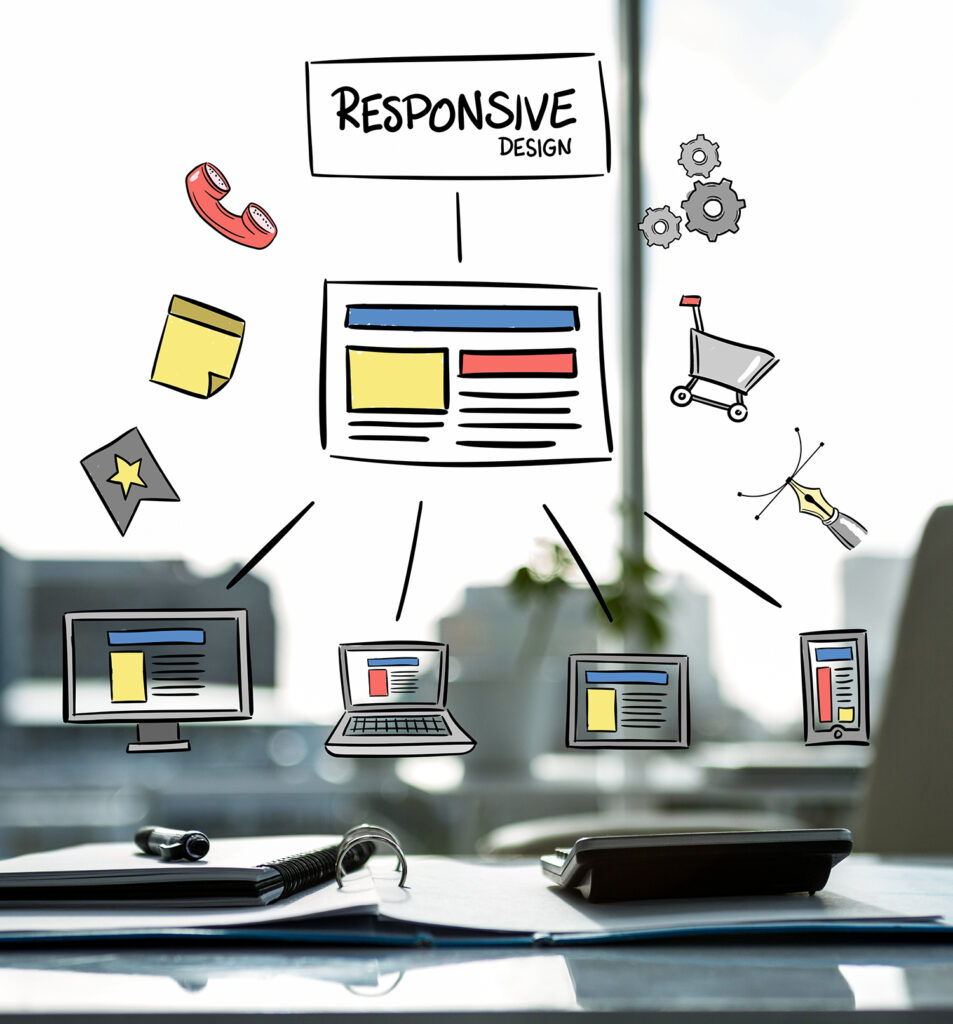
The design itself still matters, of course. But visual quality is only one part of the result. A business-grade website also needs clear messaging, conversion-focused page structure, mobile responsiveness, fast loading speed, sensible navigation, security considerations, and a content management setup your team can actually use.
Why a standard website package often falls short
Many businesses begin with an inexpensive template-based build. That can be reasonable at an early stage, especially for startups testing a market. The trade-off is that packaged solutions are usually built for speed and cost control, not for operational fit.
As a business grows, those limitations become obvious. Service pages are hard to expand. The brand starts to look generic. Landing pages do not match campaign goals. Forms are disconnected from internal workflows. Performance issues affect user trust. What looked cost-effective at the start can create hidden costs later through redesigns, patchwork fixes, and missed opportunities.
Corporate website design services are better suited to businesses that need alignment between brand, marketing, technology, and support. That does not always mean a fully custom build from day one. It means the website should be planned around how the business actually sells, communicates, and scales.
The business outcomes a better corporate site should support
A corporate website should make the company easier to trust. For many decision-makers, the website is the first serious credibility check. A weak interface, vague copy, outdated visuals, or poor mobile experience can raise doubts before a conversation even begins.
It should also make marketing spend work harder. Paid campaigns, SEO efforts, email promotions, and social traffic all perform better when users arrive on a site that is easy to navigate and built to guide action. If the site creates friction, even strong traffic sources underdeliver.
There is also a sales efficiency angle that many companies underestimate. A well-structured corporate site helps prospects self-educate before contacting your team. That can improve lead quality, reduce repetitive explanations, and help sales conversations move faster. In some sectors, it also helps with partner onboarding, distributor communication, or recruitment.
What strong corporate website design services usually include
The scope varies by company, but the strongest engagements usually combine strategy, UX, design, development, and post-launch support. If a provider focuses only on visuals, the business may still end up with structural weaknesses.
A more complete service typically starts with discovery. That stage identifies business goals, audience segments, content needs, competitor positioning, and technical requirements. From there, information architecture and user journey planning shape how the website should be organized.
UI and UX design then translate those decisions into page layouts and interactions that feel professional and intuitive. Development turns that design into a stable, responsive website that performs across devices and integrates with the tools the business relies on. After launch, maintenance and optimization matter just as much. Websites are not static assets. They need updates, security care, content improvements, and performance monitoring.
This is why many businesses prefer one partner that can handle design, development, hosting, maintenance, and digital marketing support together. It reduces handoff friction and gives the business clearer accountability.
Choosing corporate website design services without overbuying
Not every company needs the same level of website investment. A regional SME with a focused service line has different needs from a multi-brand corporation or a business managing several countries and languages. The right scope depends on business model, growth stage, internal capacity, and how central the website is to revenue generation.
If your website mainly supports credibility and basic inquiry generation, the priority may be clean design, clear service messaging, and reliable maintenance. If your website is tied closely to lead generation, marketing campaigns, or online transactions, the project should place heavier emphasis on conversion planning, integrations, landing page structure, and ongoing optimization.
The key is not to buy the biggest possible build. It is to invest in the right level of capability. Good agencies will advise accordingly instead of pushing unnecessary features that add cost without improving outcomes.
What decision-makers should ask before appointing an agency
The most useful questions are rarely about color schemes or homepage trends. They are about execution, fit, and long-term value. You need to know how the agency understands your commercial objectives, how it manages scope, what happens after launch, and whether it can support related digital needs beyond the website itself.
It is also worth asking who will handle the work, how revisions are managed, whether SEO fundamentals are considered during the build, and how future growth is accommodated. A website that looks polished at launch but becomes difficult to update six months later is not a good business decision.
For many companies, vendor consolidation is another practical consideration. If separate providers are handling website design, hosting, domains, email systems, digital campaigns, and maintenance, accountability can become fragmented. A more integrated partner model often improves speed, clarity, and support quality. This is one reason businesses work with providers such as SWOT, which can align web design, development, marketing, hosting, and business cloud services under one service relationship.
Signs your company has outgrown its current website
Some signs are obvious. The site looks dated, works poorly on mobile, loads slowly, or no longer reflects the current brand. Other signs are more operational. Marketing teams keep asking for landing pages that are difficult to create. Sales teams cannot rely on the site to explain services clearly. Internal staff avoid updating content because the system is frustrating. Leads arrive, but too many are low quality or incomplete.
Another common sign is strategic mismatch. The business has expanded into new services, entered new markets, or repositioned its brand, but the website still reflects an older version of the company. That disconnect can dilute trust and reduce the impact of every other digital effort around it.
At that stage, redesign is not about aesthetics. It is about business alignment.
The real value is in support after launch
A corporate website should not be treated as a one-time project that ends when the final pages go live. Content evolves. Marketing priorities shift. Technology changes. Security issues require attention. Search visibility needs ongoing work. If there is no support structure after launch, performance often starts slipping sooner than expected.
This is where dependable corporate website design services stand apart. They do not stop at launch. They provide continuity through maintenance, updates, design refinements, technical support, and digital growth services that keep the website useful over time.
For business decision-makers, that continuity is often more valuable than the launch itself. A website that is managed properly keeps supporting the brand, the sales process, and the wider digital ecosystem without creating unnecessary operational strain.
A strong corporate website should make your business easier to trust, easier to engage, and easier to grow. If your current site is not doing that, the right next step is not another patch. It is a service partner that can build around the way your business actually works.