



A homepage has a few seconds to do a serious job. It needs to tell the right visitor they are in the right place, show business credibility fast, and move them toward action without creating friction. That is what makes a high converting homepage – not visual polish alone, but a clear structure built around commercial intent.
For many businesses, the homepage carries too much weight because it is expected to introduce the brand, explain services, build trust, and generate inquiries at the same time. That is realistic, but only if the page is designed with priorities. A homepage that tries to say everything usually converts poorly. A homepage that guides decision-making tends to perform much better.
What makes a high converting homepage starts with clarity
The first test is simple. When a visitor lands on the page, can they understand what the business offers, who it serves, and what they should do next within a few seconds?
This is where many homepages fail. They lead with vague headlines, generic statements about quality, or design-heavy banners that look impressive but say very little. Business decision-makers do not spend time decoding a message. If the offer is unclear, they move on.
A high converting homepage starts with a strong value proposition above the fold. That usually includes a direct headline, a short supporting line, and a visible call to action. The message should be specific enough to qualify interest. For example, a company offering web development, digital marketing, and cloud services should not hide behind broad phrases like “innovative digital solutions.” It should state what it does and the business outcome it helps create.
Clarity also means matching the visitor’s intent. If someone arrives from a Google search, an ad campaign, or a referral, the homepage should feel consistent with that expectation. Misalignment between traffic source and homepage messaging often reduces conversion before design is even a factor.
Strong hierarchy matters more than decoration
A homepage needs to guide attention in the right order. Visitors should not have to guess what matters most.
Visual hierarchy helps establish this. The headline should stand out first, then the supporting message, then the primary action. After that, the page should move naturally into proof, services, differentiators, and next-step prompts. Good hierarchy reduces cognitive load. It helps visitors scan quickly while still understanding the business case.
This is also where design discipline matters. Too many competing colors, buttons, animations, or competing sections weaken the page. Conversion improves when the homepage is organized around one primary objective with supporting paths for users at different stages.
That does not mean every homepage should be minimal. Some businesses need more context, especially if the service is high-value or complex. But even on longer homepages, the page should feel structured, not crowded.
Messaging should focus on outcomes, not internal descriptions
Businesses often write homepage copy from their own perspective. They talk about being established, innovative, committed, or customer-focused. Those statements are common, and because they are common, they do very little.
High converting homepages shift the emphasis to the client’s problem, the offered solution, and the expected result. That is a more effective way to hold attention and build relevance. A marketing manager or business owner wants to know whether your company can improve visibility, generate leads, support operations, or strengthen credibility online.
This does not mean the homepage should be aggressively salesy. It should be commercially clear. The difference is important. A page can sound confident and professional without making inflated claims.
Specificity is what improves conversion. If the business serves startups, SMEs, and established companies, say so. If it offers design, development, hosting, and marketing under one provider, say so. If support and long-term maintenance are part of the value, make that visible. These details help reduce uncertainty, which is one of the biggest barriers to inquiry.
Trust signals are part of what makes a high converting homepage
Even when the offer is strong, visitors still need confidence. A homepage has to answer an unspoken question: why should we trust this business with our budget, platform, or brand?
Trust signals do that work. They can include client logos, testimonials, certifications, project counts, years of experience, partner status, awards, case study references, or visible indicators of secure and professional operations. For service businesses, trust often makes the difference between interest and contact.
The right trust signal depends on the audience. Corporate stakeholders may care about delivery reliability, systems capability, and long-term support. SMEs may respond more strongly to practical proof that the provider is responsive, experienced, and cost-efficient. Startups may look for a partner that can move quickly while offering strategic direction.
The trade-off is that trust elements should support the page, not overwhelm it. Ten weak badges will not outperform one strong client proof section. The goal is credibility, not clutter.
Calls to action must be visible and low-friction
A homepage can attract attention and still fail to convert if the next step is unclear.
Every high converting homepage needs a primary call to action that reflects the business model. In some cases, that is “Get a Quote.” In others, it may be “Talk to Our Team,” “Book a Consultation,” or “Start Your Project.” The wording matters because it shapes expectation. A strong CTA feels relevant to the buying process and realistic for the visitor’s stage.
It also helps to include secondary CTAs for people who are not ready to inquire immediately. Some may want to view services, review past work, or understand the company profile first. That is not a distraction if it is intentionally designed. It supports different levels of readiness while still moving users deeper into the site.
Friction is another issue. If the homepage leads to a contact form that asks for too much information too early, conversion can drop. The same applies when CTAs are buried, repeated inconsistently, or presented with weak contrast. Good conversion design is often about removing small obstacles.
Mobile performance is no longer a supporting concern
For many businesses, a large share of homepage traffic comes from mobile devices. Yet some websites are still designed primarily for desktop presentation.
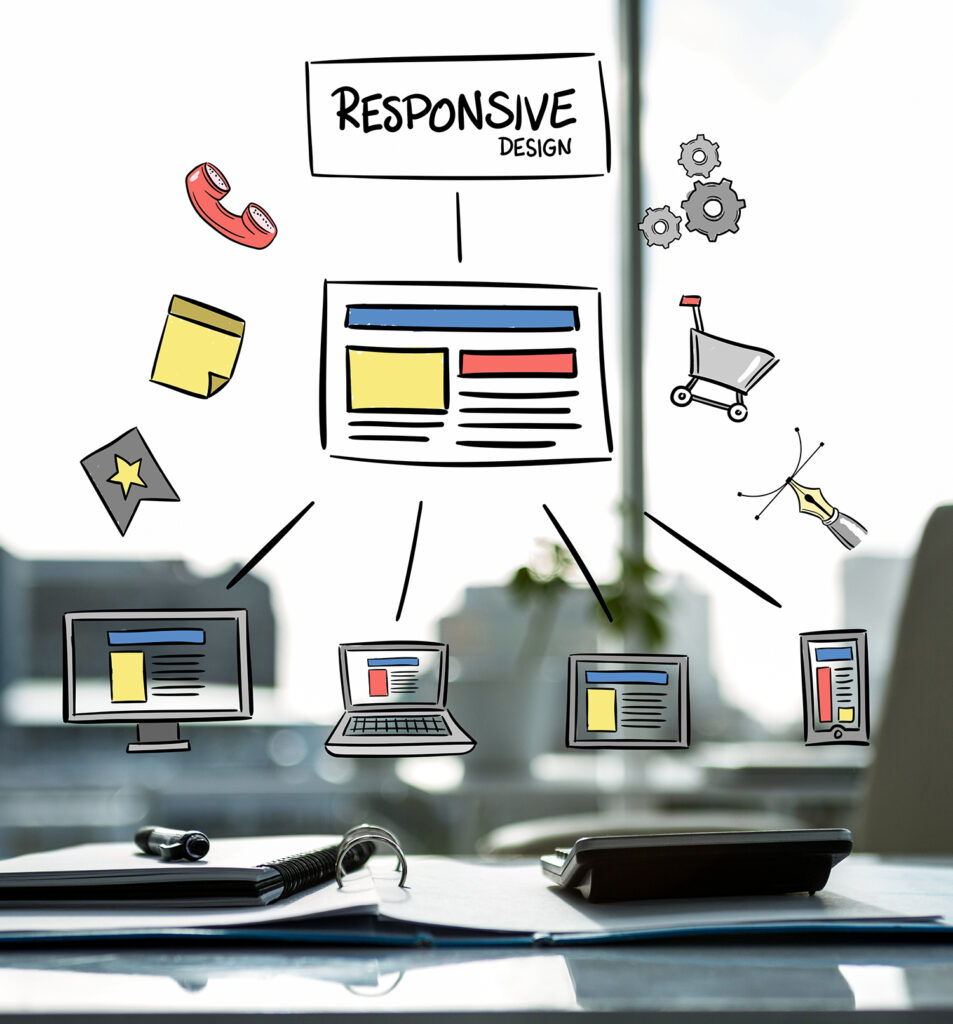
A high converting homepage must work well on mobile, not just technically load on a smaller screen. Headlines must remain readable, sections must stack logically, and forms or buttons must be easy to use. Navigation should be straightforward, and page speed should support quick access.
This matters for more than convenience. Mobile friction can affect lead volume, ad performance, and search visibility. If a prospect reaches your homepage from a campaign and the page loads slowly or feels difficult to use, the loss is immediate.
There is sometimes a trade-off between rich visuals and performance. Not every business needs an ultra-light interface, but every business does need a homepage that respects the visitor’s time.
Relevance beats completeness
A common mistake is treating the homepage like a full brochure. Businesses try to fit every service, every selling point, every achievement, and every message into one page. The result is usually diluted.
A homepage does not need to explain everything. It needs to move the right visitor to the right next step.
That means choosing what deserves prominence. If lead generation is the goal, service relevance, trust, and CTA flow should lead the structure. If the homepage serves a broad business offering, then the page should present those services in a way that helps users self-identify quickly. Organized summaries perform better than dense blocks of information.
This is where an integrated digital strategy becomes valuable. Strong homepage performance rarely comes from design alone. It comes from aligning brand positioning, user experience, copywriting, technical performance, and traffic intent. That is why many companies work with a single digital partner instead of separating strategy, development, hosting, and marketing across multiple vendors.
Measurement is what turns a good homepage into a better one
No homepage should be treated as final. Conversion rates improve when businesses review user behavior, traffic quality, and form completion patterns over time.
Sometimes the issue is the headline. Sometimes it is weak CTA placement, poor mobile spacing, or irrelevant traffic sources. Sometimes the homepage is doing its job, but downstream pages are failing. Without measurement, teams tend to guess.
A high converting homepage is usually the result of iteration. The strongest pages are refined through real user response, not just stakeholder preference. That means testing copy, adjusting layouts, improving page speed, and strengthening trust elements based on actual performance.
For business owners and marketing teams, this is the practical standard to keep in mind: a homepage should not simply represent the brand. It should contribute to revenue, lead quality, and business confidence.
If your homepage looks professional but does not generate consistent action, the issue is rarely one missing feature. More often, it is a mix of unclear messaging, weak structure, low trust, or avoidable friction. Fixing those areas can turn the homepage from a static introduction into a reliable sales asset. And that is the result most businesses should be building for.