



A business website should do more than display your company name and contact details. When considering how to start a website, the real objective is to create a credible digital asset that helps customers understand your offer, trust your business, and take the next step.
For startups, SMEs, and established companies, a website is often the first meaningful interaction a prospect has with the brand. A poorly planned site can create doubt before a sales conversation begins. A well-executed site supports visibility, lead generation, customer service, recruitment, and long-term growth.
Start With the Business Objective
Before selecting a domain name, template, or hosting plan, define what the website needs to achieve. The right approach for a corporate services company is different from the right approach for an e-commerce retailer, a property developer, or a company launching a new mobile application.
A business-focused website usually has one or more clear objectives: generating qualified inquiries, selling products online, presenting company credentials, supporting sales teams, recruiting talent, or providing information to existing customers. These objectives should determine the structure, content, and functionality of the site.
For example, a professional services firm may need strong service pages, case studies, credentials, and inquiry forms. An online retailer needs product filtering, secure payment options, inventory management, and delivery information. Trying to use the same website structure for both creates friction for users and limits commercial results.
It is also useful to define success before development begins. That may mean a target number of monthly leads, online sales, appointment bookings, brochure downloads, or calls. Clear measurements allow the website to be assessed as a business investment rather than a purely visual project.
How to Start a Website With the Right Foundation
The foundation includes your domain, hosting, business email, security setup, and ownership arrangements. These decisions may appear technical, but they affect reliability, brand credibility, and future operational control.
Choose a domain name that is easy to remember, easy to spell, and aligned with your business identity. Where possible, use your company or brand name. Avoid unnecessary hyphens, confusing abbreviations, and domain names that are difficult to communicate verbally. A relevant domain extension can also support local positioning, while a .com domain may suit businesses serving broader markets.
Hosting should be selected according to the website’s expected traffic, application requirements, security needs, and growth plans. A simple company profile site may perform well on reliable shared hosting. A high-traffic e-commerce platform, custom web application, or corporate site with multiple integrations may require more capable infrastructure.
Business email is another important consideration. Using a professional domain-based email address strengthens trust and gives the company better control over staff access and communication. Ensure the company, rather than an individual employee or external freelancer, retains ownership of the domain, hosting account, source files, and key business systems.
Plan the Website Before Designing It
A strong website begins with structure, not colors. Start by mapping the key pages visitors need to see and the path they should take from first visit to inquiry or purchase.
Most business websites require a homepage, company profile, services or product pages, contact page, and legal pages. Depending on the business, useful additions may include project portfolios, industry pages, team profiles, careers, customer resources, FAQs, or an insights section.
Each page should have a defined job. The homepage should quickly explain what the company does, who it serves, and why it is a credible choice. Service pages should address specific customer needs, explain the delivery approach, and provide a clear call to action. Contact pages should reduce barriers by including direct contact details, location information where relevant, and a straightforward inquiry form.
This is also the right stage to identify required features. Common requirements include lead forms, WhatsApp integration, booking tools, product catalogs, payment gateways, customer portals, multilingual content, newsletter sign-ups, CRM connections, and analytics tracking. Identifying these requirements early prevents costly rework after the design has been approved.
Prioritize Clear Design and User Experience
Design should reinforce the business, not distract from it. Visitors make quick judgments about credibility, especially when comparing vendors. A cluttered layout, inconsistent branding, unreadable text, or slow pages can weaken confidence regardless of how capable the company may be.
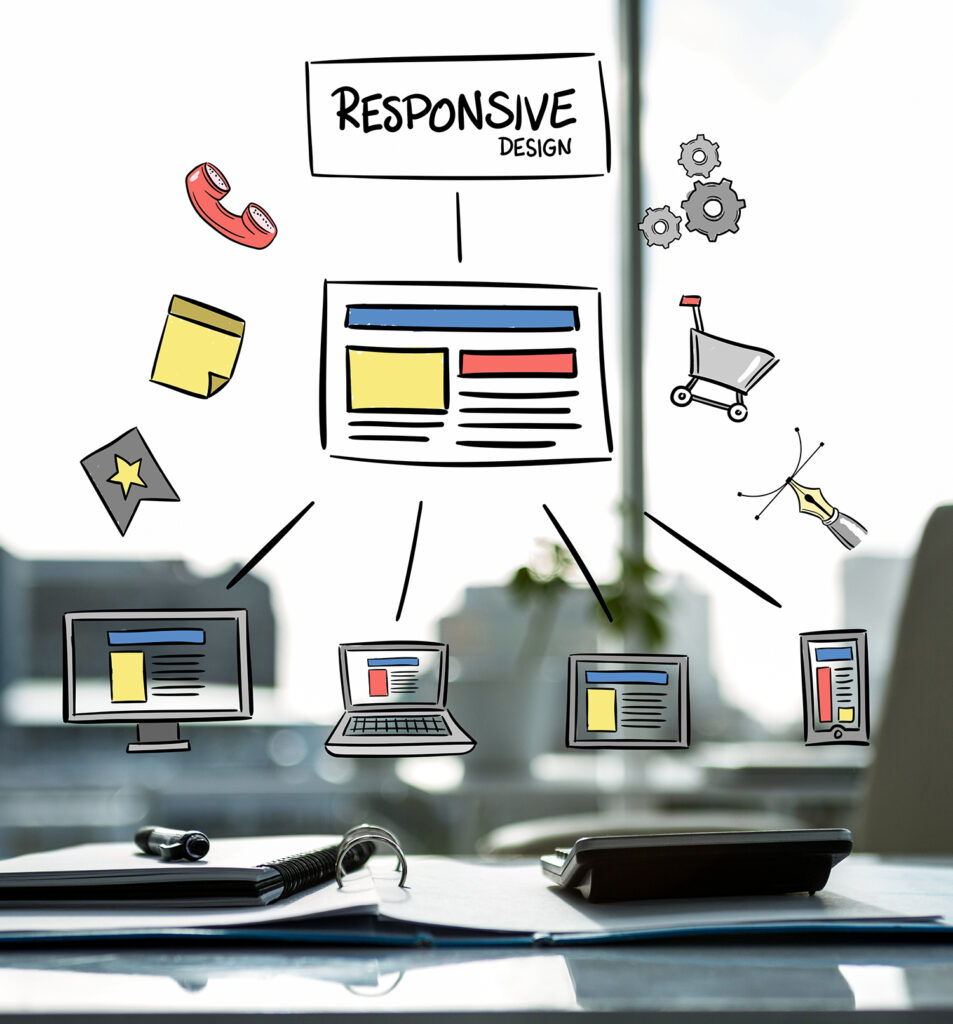
Effective business web design uses clear visual hierarchy. Important messages, services, proof points, and calls to action should be easy to identify. Navigation should be simple enough that users can find what they need without guessing. On mobile devices, buttons, forms, menus, and content must remain easy to use.
A tailored design is often worthwhile when a business needs to distinguish itself in a competitive market, communicate a premium position, or support complex customer journeys. Template-based websites can be suitable for smaller budgets or simple requirements, but they may create limitations in layout, performance, integrations, and future customization.
The decision depends on commercial needs. The priority is not whether a site uses a template or custom code. The priority is whether it presents the business professionally, performs reliably, and can support the next stage of growth.
Build Content Around Customer Decisions
Many websites fail because they describe the business internally rather than helping customers make a decision. Prospects want to know whether you understand their problem, whether your solution fits their requirements, and whether your company can deliver reliably.
Website copy should lead with the value the customer receives. Explain services in plain business language, then support the message with relevant detail about processes, deliverables, industries served, technology, experience, or support arrangements.
Credibility deserves dedicated space. Company milestones, certifications, client sectors, project outcomes, testimonials, team expertise, and service guarantees can reduce perceived risk. The strongest proof is specific. A statement about measurable improvement, successful delivery, or long-term client support is more persuasive than a generic claim that a company provides excellent service.
Keep calls to action practical. “Request a quotation,” “Speak to our team,” “Book a consultation,” or “Get technical support” provides more direction than a vague invitation to learn more. The call to action should match the visitor’s stage of decision-making. A high-value corporate service may require a consultation, while a low-cost product can move directly to checkout.
Choose Technology That Fits the Requirement
The platform behind the website affects editing, speed, security, integration options, and maintenance costs. There is no single best platform for every business.
Content-managed websites are suitable when internal teams need to update pages, publish articles, or manage basic content without technical support. E-commerce platforms are designed for online sales but must be assessed for payment, shipping, product, and inventory requirements. Custom web development may be the better option when the business needs unique workflows, customer accounts, dashboards, system integrations, or specialized functionality.
Avoid choosing technology solely because it is popular or inexpensive at the beginning. A low initial cost can become expensive if the site cannot integrate with essential systems, loads slowly, or requires a rebuild within a short period. Discuss anticipated growth, integrations, user roles, data requirements, and maintenance needs before committing to a platform.
Make Search Visibility Part of the Build
Search engine optimization should be considered during planning and development, not treated as an afterthought. A site needs logical page structure, relevant page titles, well-organized content, mobile-friendly design, fast loading times, and properly implemented technical foundations.
SEO also depends on the quality of content. Build individual pages around the services, products, locations, and customer problems the business wants to be found for. A single general services page rarely provides enough relevance for a company offering multiple solutions.
For businesses investing in Google Ads, social media campaigns, email marketing, or WhatsApp broadcasts, dedicated landing pages can improve conversion performance. Sending every campaign visitor to a homepage makes it harder to match the campaign message to the offer. A focused page with one service, one audience, and one action often produces stronger results.
Protect, Test, and Maintain the Website
A website is not finished when it goes live. It requires ongoing attention to remain secure, accurate, fast, and commercially useful.
Before launch, test the site across desktop and mobile devices. Check every form, button, navigation item, payment process, phone number, confirmation message, and tracking setup. Make sure the website uses a secure connection and that appropriate backups are in place.
After launch, maintenance should include software updates, security monitoring, backup checks, performance reviews, content updates, and periodic testing of forms and integrations. Neglecting maintenance can lead to outdated information, security risks, broken functionality, and missed leads.
Analytics should also be reviewed regularly. Identify which pages attract visitors, where inquiries come from, what users search for, and where they leave the site. These findings support practical improvements to content, design, and marketing campaigns.
A dependable partner can simplify this process by coordinating strategy, design, development, hosting, marketing, and ongoing support under one accountable relationship. SWOT helps businesses turn website requirements into tailored digital solutions designed around measurable commercial outcomes.
The most effective first step is to treat your website as part of your business operations, not a one-time design expense. Start with a clear objective, make decisions based on customer needs, and build on a foundation that can continue supporting your business as it grows.