



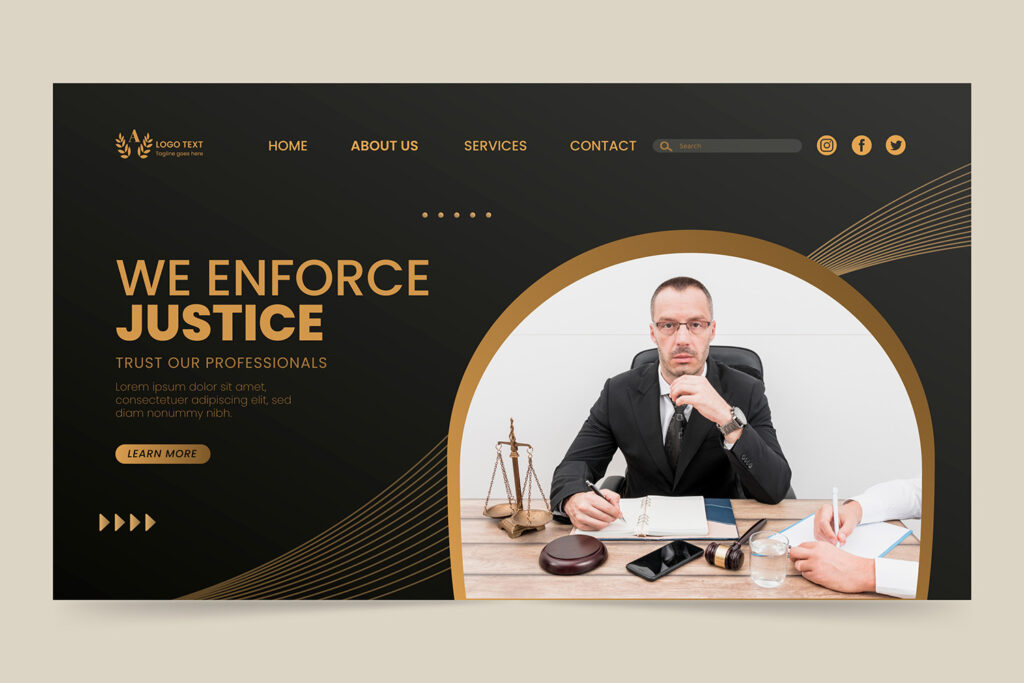
A prospective client rarely arrives at a law firm website feeling relaxed. They may be facing a criminal charge, a business dispute, a family breakdown, an injury, or a transaction with serious financial consequences. Professional law firm website development must account for that reality. The site needs to establish credibility quickly, explain the firm’s value clearly, and give visitors a secure, straightforward route to contact the right legal team.
For law firms, a website is not simply a digital brochure. It is a business development asset, a first impression of professional standards, and often the first point at which a prospective client decides whether to make an inquiry. Poor structure, vague service descriptions, slow loading pages, or an outdated design can create doubt before a lawyer has the opportunity to speak with the client.
Why Law Firm Websites Need a Different Standard
Legal services are built on trust, judgment, confidentiality, and expertise. A website has to communicate these qualities without making promises that create regulatory or reputational risk. That balance is what separates a polished law firm site from a generic corporate template.
Visitors should be able to understand who the firm serves, what matters it handles, where it operates, and what happens when they get in touch. A commercial law firm may need to demonstrate sector knowledge, transaction experience, and corporate capability. A family or personal injury practice may need clearer reassurance, empathetic language, and visible consultation pathways. The objective is the same: reduce uncertainty and make the next step feel appropriate.
Design also carries meaning. Heavy visual effects, stock imagery that feels unrelated to the firm, or crowded pages can undermine the seriousness clients expect from legal counsel. A professional interface should feel considered and current, but restrained. Clear typography, logical page hierarchy, purposeful imagery, and strong mobile usability create confidence without distracting from the firm’s legal credentials.
Professional Law Firm Website Development Starts With Strategy
The strongest website projects begin before design concepts or code. The development team should first understand the firm’s commercial priorities: which services need more qualified leads, which industries matter most, whether the firm serves local or international clients, and how inquiries are currently managed.
A website for a boutique litigation practice should not be planned in the same way as one for a multi-practice corporate firm. The first may prioritize fast access to consultation requests, attorney profiles, and urgent-contact information. The second may require detailed practice area architecture, industry pages, thought leadership, multilingual capabilities, and a content structure that supports long-term search visibility.
This discovery stage also identifies the actions that matter most. For one firm, the primary conversion may be a consultation request. For another, it may be a phone call, a meeting booking, a recruitment application, or a corporate tender inquiry. A site should guide each visitor toward a relevant action rather than presenting every option with equal weight.
A tailored solution also considers internal operations. If staff need to update practice pages, publish articles, receive inquiry notifications, or review website performance without relying on a developer for every change, the content management process must be practical. A good build supports the people responsible for using it after launch, not only the team creating it.
Essential Pages That Support Credibility and Inquiries
A law firm site does not need excessive pages. It does need the right information organized around how prospective clients assess a legal provider. The homepage should state the firm’s positioning, major practice areas, and contact route within seconds. It should not require visitors to decode broad marketing language before learning what the firm actually does.
Practice area pages deserve particular attention. Instead of a short paragraph filled with legal terms, each page should explain the types of matters handled, the client groups served, the firm’s approach, and the appropriate next step. Search engines benefit from this clarity, but the greater value is for visitors deciding whether the firm is relevant to their situation.
Lawyer profiles are equally important. Clients are often hiring people, not only a firm name. Profiles should present qualifications, admissions, relevant experience, professional memberships, languages, and selected areas of focus in a consistent format. The tone should be factual and confident. Unsupported claims such as “best lawyer” or “guaranteed results” can weaken trust and may conflict with local professional advertising requirements.
A well-planned site commonly includes firm information, practice areas, lawyer profiles, insights or publications, careers where relevant, and a contact page. The value is not in the number of sections. It is in making each section useful, accurate, easy to maintain, and connected to a clear business purpose.
Content Must Be Clear Without Oversimplifying Legal Work
Legal content needs more than correct terminology. It needs structure and judgment. Visitors may not know the legal name of their problem, and many will search using plain-language questions. A website should meet them there while preserving the firm’s professional authority.
For example, an employment law page can address workplace disputes, dismissal concerns, contracts, and compliance matters before explaining the legal services available. A corporate services page can identify company incorporation, shareholder arrangements, mergers and acquisitions, regulatory considerations, or contract work based on the firm’s actual scope. This approach makes the content easier to understand and helps attract inquiries that fit the practice.
Thought leadership can reinforce expertise when it is used strategically. Brief legal updates, sector commentary, case notes, or regulatory explainers can demonstrate active knowledge and give the firm additional search visibility. However, publishing irregular articles with no clear audience is rarely productive. It is better to establish a manageable editorial plan than create a resource center that becomes outdated.
Every page should also be reviewed for legal and professional compliance. Requirements vary by jurisdiction, practice type, and bar or regulatory body. Testimonials, case outcomes, specialist claims, privacy notices, and disclaimer language require careful consideration. Web developers can build the technical framework, but firms should ensure final legal content and claims are approved by the appropriate internal or external adviser.
Security, Speed, and Accessibility Are Business Requirements
A contact form may collect names, email addresses, phone numbers, and sensitive descriptions of legal issues. That makes security a core requirement, not a technical add-on. Website development should include secure hosting, SSL protection, controlled administrative access, dependable backups, software updates, and a process for handling form submissions responsibly.
The right level of security depends on the website’s function. A standard informational site has different needs from a client portal, document-upload feature, payment system, or case-management integration. The more sensitive the data and transactions, the more carefully the firm must assess access controls, storage, vendor responsibilities, and privacy obligations.
Performance matters just as much. Slow pages create frustration, particularly when someone is looking for urgent legal support on a mobile device. Optimized images, efficient development, quality hosting, and ongoing monitoring help keep the experience responsive. Mobile design should not be treated as a reduced version of the desktop site. Phone users need readable text, tap-friendly contact options, and forms that are quick to complete.
Accessibility should be part of the development plan as well. Appropriate color contrast, readable font sizes, descriptive navigation, keyboard access, and clear form labels improve usability for a wider range of visitors. They also reflect the professional care a legal organization should demonstrate in every client-facing interaction.
Build for Search Visibility, But Do Not Build for Search Alone
Search engine optimization gives law firms a path to reach clients who are actively researching legal help. Effective SEO begins with a clean site structure, specific page topics, useful content, strong technical foundations, and location signals where the firm serves defined geographic markets.
The trade-off is that search performance takes time. A new website will not automatically rank for highly competitive terms simply because it has been launched. Firms should avoid development proposals that promise immediate first-page results without considering competition, content quality, domain history, and ongoing optimization.
The more sustainable approach is to build a website that is useful enough to earn attention over time. Each practice page should answer real client questions. Each technical element should make the site easier for search engines to understand. Each marketing campaign should direct traffic to a relevant landing page rather than a generic homepage.
What to Expect From the Right Development Partner
A dependable agency should manage law firm website development as a structured business project, not a one-time design exercise. That means clear scope, realistic timelines, documented approvals, responsive communication, testing before launch, and a defined support plan after the site goes live.
The right partner can coordinate strategy, UI/UX design, custom development, hosting, maintenance, content support, and performance marketing within one accountable relationship. This reduces the operational burden of managing separate vendors and helps ensure that marketing activity, website performance, and technical maintenance are aligned. SWOT supports this type of integrated execution for organizations that need a professional digital presence with dependable ongoing support.
Before appointing a provider, decision-makers should ask how the agency approaches security, content migration, mobile testing, backup procedures, ownership of website assets, maintenance response times, and future enhancements. Price matters, but the lowest initial quote can become expensive if the site is difficult to update, lacks proper support, or needs to be rebuilt shortly after launch.
A law firm’s website should make a difficult decision easier for the person on the other side of the screen. When it presents the firm’s expertise with clarity, protects client confidence, and creates a reliable path to contact, it becomes more than a marketing expense. It becomes a credible extension of the legal service clients are seeking.