



A corporate website is often the first place a prospect tests whether a company is credible enough to contact. Before a sales call, proposal, or meeting, buyers assess the business through its messaging, proof, usability, and professionalism. The best corporate website features do more than make a company look established. They remove doubt, guide serious visitors toward action, and give sales and marketing teams a stronger platform for growth.
For founders, marketing managers, and corporate stakeholders, the objective is not to add every available function. It is to invest in the features that support commercial priorities: clearer positioning, qualified inquiries, operational efficiency, and a brand experience that holds up under scrutiny.
A Corporate Website Is a Business System
A polished homepage alone does not make a corporate website effective. Decision-makers may arrive through a Google search, a campaign landing page, a shared proposal, or a referral. They need to understand what the company does, why it is qualified, and how to take the next step without working through vague copy or confusing navigation.
The right feature set depends on the sales model. A professional services company may need strong case studies and consultation forms. A manufacturer may need product specifications, distributor support, and downloadable technical documents. A regional business may require localized content, multilingual pages, or separate contact pathways for Malaysia and Singapore. The common requirement is clear: every major element must earn its place by helping the business communicate, convert, or operate more effectively.
12 Best Corporate Website Features for Growth
1. Clear positioning above the fold
Visitors should understand the company’s offer within seconds. A strong opening section states who the company serves, what outcome it delivers, and why it is a credible choice. Generic statements about innovation or excellence are rarely enough on their own.
Clear positioning does not mean oversimplifying a complex business. It means translating complex services into commercial value before presenting the detail. A visitor should never need to hunt for the basic answer to, “Is this company relevant to my needs?”
2. Navigation built around buyer intent
Corporate websites commonly organize everything around internal departments. Buyers do not think that way. They look for services, industries, solutions, products, company credentials, resources, and contact options.
Navigation should make these routes obvious and keep top-level choices focused. If a business has a broad offering, category pages can introduce each service before directing visitors to more detailed pages. This approach is more useful than a crowded menu that forces people to guess where important information sits.
3. Service pages with real decision-making detail
A service page should not read like a brochure headline expanded into a few paragraphs. It should explain the problem addressed, the scope of delivery, the expected process, and the business outcomes involved. This is where a company demonstrates that it understands the buyer’s operational requirements.
The level of detail should match the buying cycle. High-value or technical services usually require deeper explanations, FAQs, project phases, and supporting examples. Shorter pages can work for familiar, low-consideration offerings, but they still need a clear reason to inquire.
4. Credibility signals that are easy to verify
Corporate buyers are trained to manage risk. They look for evidence that a provider is legitimate, capable, and dependable. Client logos, project examples, certifications, industry recognition, testimonials, team expertise, and years in operation can all help when they are specific and presented honestly.
Proof works best when connected to a relevant claim. A statement about delivering measurable outcomes is stronger when supported by a case example showing the challenge, work completed, and result. Avoid filling pages with vague praise. Buyers trust evidence they can understand.
5. Case studies that show commercial impact
A portfolio proves visual capability. A case study proves business thinking. The strongest case studies show what was required, the constraints involved, the strategic approach, and what changed after delivery.
Not every project will have public performance data, especially where confidentiality applies. In those cases, explain the operational outcome instead: a faster quotation process, a clearer product catalog, improved content management, or an easier route for sales inquiries. Specificity is more persuasive than inflated claims.
6. Purposeful conversion paths
A contact form at the bottom of every page is not a conversion strategy. Corporate sites should offer relevant next steps based on visitor readiness. A new prospect may request a consultation. An existing customer may need support. A partner may want to submit an inquiry. A job seeker should not have to use a sales form.
Forms should ask for enough information to qualify an inquiry without becoming an obstacle. For complex projects, fields such as budget range, required timeline, and service interest can help the sales team respond with greater accuracy. For early-stage inquiries, a shorter form may generate more opportunities. The right balance depends on lead volume and internal capacity.
7. Fast, mobile-ready, accessible design
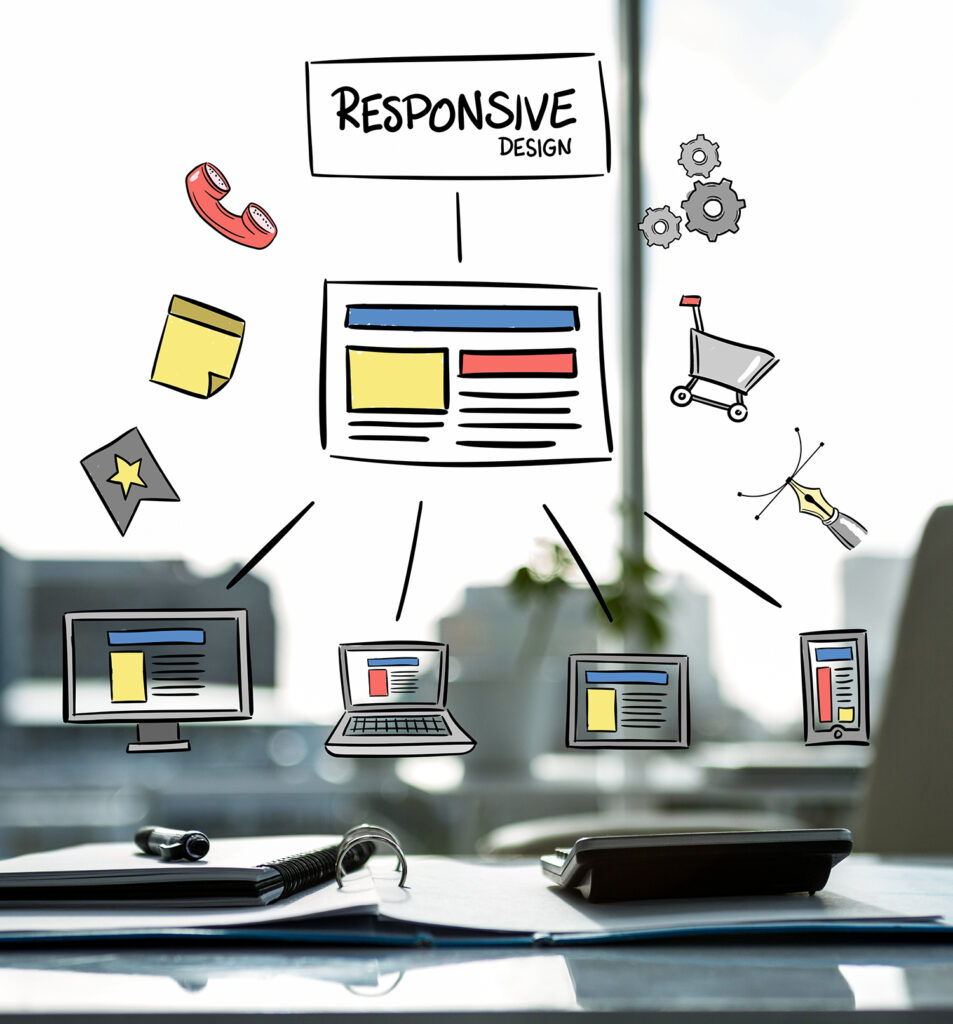
Performance is a credibility issue. A slow, unstable site creates friction before a visitor has even reviewed the company’s offer. Mobile responsiveness is equally essential because executives and managers regularly research providers from phones between meetings.
Accessibility should be considered during design and development, not added as an afterthought. Readable contrast, logical heading structures, keyboard-friendly interactions, descriptive form labels, and legible typography improve usability for a wider audience. They also create a more disciplined user experience for everyone.
8. Secure infrastructure and clear governance
A corporate website is part of the company’s digital infrastructure. It needs secure hosting, HTTPS, controlled administrative access, reliable backups, software updates, and a clear process for recovering from technical issues.
Governance matters as much as technology. Define who can publish content, approve changes, access forms, and manage domain or hosting accounts. Companies often discover these gaps during a staff transition or website incident. A reliable support arrangement prevents the website from becoming an unmanaged business risk.
9. A practical content management system
Marketing teams need the ability to update campaign pages, publish articles, revise service information, and maintain company news without waiting weeks for a developer. A well-configured content management system gives the business appropriate control while protecting the design and technical structure.
More flexibility is not always better. An unrestricted editor can accidentally break layouts, weaken search performance, or create inconsistent brand presentation. The most effective setup provides reusable page sections, clear editorial rules, and access levels aligned with each user’s responsibility.
10. Search foundations built into the structure
Search visibility starts with website architecture, not a last-minute keyword exercise. Each core service, industry, or solution should have a distinct page that answers a clear user need. Page titles, headings, internal content structure, image handling, and technical performance all contribute to whether search engines can interpret the site accurately.
A corporate website does not need to publish high volumes of content to be found. It needs useful, authoritative pages that match how prospective buyers search. Ongoing SEO can then expand visibility through targeted service content, industry insights, and refined landing pages.
11. Integrated lead and reporting tools
An inquiry is only valuable if the business can respond to it. Corporate websites should connect forms, email notifications, analytics, customer relationship management systems, scheduling tools, or other internal workflows where appropriate. This reduces manual handoffs and makes lead handling more accountable.
Reporting should answer business questions, not merely report traffic. Track which pages generate inquiries, which campaigns produce qualified leads, where users abandon forms, and how visitors move through key pages. These insights provide a practical basis for improvement rather than relying on assumptions.
12. Ongoing maintenance and improvement capacity
Launching a website is the start of its working life, not the finish line. Services change, new case studies become available, campaigns require landing pages, and software needs routine attention. A site that remains untouched for years can make an active company appear less current than it is.
Ongoing maintenance should cover technical health as well as content and conversion opportunities. Monthly reporting, security checks, backups, update management, and planned improvement cycles allow the website to remain useful as business priorities evolve.
How to Prioritize Features Without Overspending
The most effective corporate website plan begins with the buyer journey and the commercial objective. Identify the pages a prospect needs before contacting the company, the proof they need to see, and the internal process that follows an inquiry. Then separate essential launch requirements from enhancements that can be introduced after performance data is available.
For example, a new company may prioritize positioning, service pages, lead forms, analytics, and a secure technical foundation. An established corporation replacing an outdated site may also need content migration, stakeholder approvals, CRM integration, multilingual capability, or user permissions. A custom approach is often more cost-effective than paying for features that do not support a real workflow.
The strongest website projects also involve the right internal stakeholders early. Sales teams can identify common buyer objections. Marketing can clarify campaign needs. Operations can define support and approval requirements. Their input helps prevent a website from becoming attractive but commercially disconnected.
A corporate website should make it easier for the right buyer to trust the company, understand its value, and begin a serious conversation. With strategy, design, development, marketing, hosting, and ongoing support aligned under one accountable partner, SWOT helps businesses turn that expectation into a dependable digital asset.