



A website can look polished and still fail the business behind it. If visitors cannot quickly understand your offer, request a quote, find the right product, or trust your company, the issue is not cosmetic. A custom website company addresses these commercial gaps by building a digital platform around how your business sells, operates, and grows.
For startups, SMEs, and established companies, the real question is not whether to have a website. It is whether that website can support measurable outcomes: qualified leads, stronger credibility, easier customer journeys, better campaign performance, and fewer internal workarounds. A tailored build is often the right answer when an off-the-shelf template begins to limit those goals.
What a Custom Website Company Actually Delivers
Custom website development is not simply choosing different colors or adding a unique homepage layout. It begins with the way your business needs to work online. That may include presenting a complex service offering clearly, routing inquiries to the right sales team, managing product catalogs, integrating a CRM, supporting multiple locations, or giving staff a practical content management process.
A capable agency translates these requirements into a website structure, user experience, visual identity, and technical foundation that work together. The result should feel straightforward for visitors and manageable for your team, even when the underlying business process is complex.
Strategy before design
A strong project starts with business questions, not a gallery of design references. Who is the priority audience? What makes them hesitate? What action should they take next? Which services or products create the greatest value for the business? The answers shape page architecture, messaging priorities, calls to action, and content requirements.
This stage prevents a common problem: building a visually impressive website that does not reflect the sales process. A corporate buyer may need case studies, compliance information, and a clear procurement path. A service business may need landing pages designed for paid campaigns and fast inquiry forms. An e-commerce brand may need product filtering, inventory connections, and checkout confidence. Each scenario requires different decisions.
Design that supports action
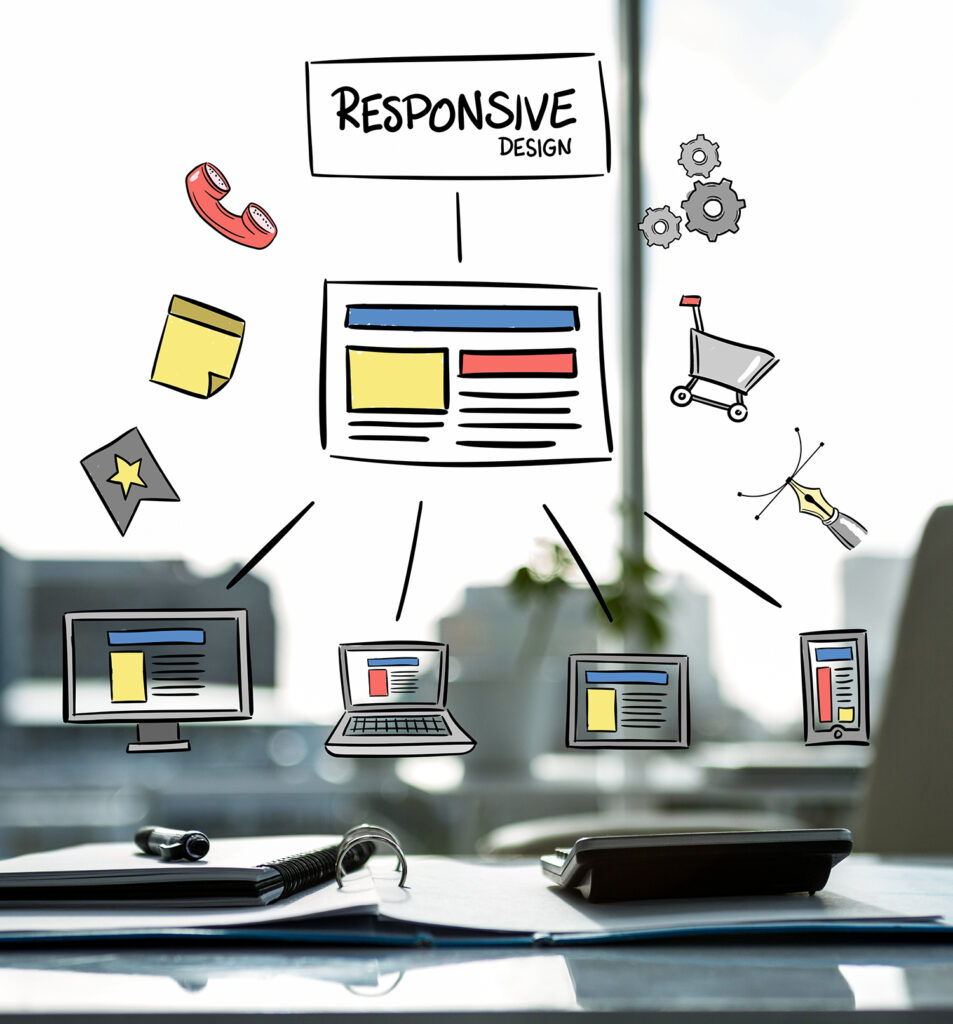
UI and UX design should help people make decisions with less effort. Clear hierarchy, readable content, mobile-friendly layouts, useful navigation, and relevant calls to action all influence whether a visitor progresses or leaves.
Custom design also protects brand consistency. When your website, company profile, campaign pages, email communications, and social advertising use a coordinated visual and messaging system, the business appears more established. That credibility matters particularly when customers are comparing providers they have never met.
Development built around real requirements
Custom development becomes valuable when the website needs more than standard pages. Examples include quotation workflows, member portals, booking tools, multilingual content, product configurators, integration with third-party systems, or dashboards for internal teams.
Not every business requires every feature. Adding unnecessary functionality raises cost, maintenance demands, and the chance of user friction. The right approach is to prioritize features that improve revenue, service delivery, or operational efficiency, then create a clear path for future enhancements.
When a Custom Website Company Is the Right Choice
A template-based site can be a sensible starting point for a new business with a limited offer, a tight budget, and a need to launch quickly. It is not automatically the wrong choice. The limitation appears when the business outgrows the template’s structure, performance, content controls, or ability to connect with other systems.
A custom website company is usually a better fit when your site must represent a differentiated brand, support multiple services or audiences, generate leads through specific workflows, or integrate with essential business tools. It is also valuable when marketing teams need the freedom to create campaign pages without disrupting core website structure.
For companies in Malaysia and Singapore competing in crowded B2B and consumer markets, the website often carries more responsibility than a digital brochure. It may be the first sales conversation, the source of inbound inquiries, the center of a search strategy, and the destination for Google Ads, social campaigns, email promotions, and WhatsApp communications. A generic site can struggle under that workload.
Custom work is also appropriate when reliability matters. If your team depends on the site to receive inquiries, process orders, share customer information, or communicate with stakeholders, hosting, security, backups, updates, and maintenance deserve consideration from the beginning. These are business continuity requirements, not technical extras.
How to Evaluate a Custom Website Partner
The best agency relationship is based on clarity. Before comparing quotations, assess whether the provider understands what the website must accomplish after launch. A lower project price may be attractive, but it can become expensive if the scope is vague, essential functions are excluded, or no one is accountable for support once the site is live.
Ask how the agency approaches discovery and scope definition. A dependable partner should be able to explain how it identifies objectives, plans the sitemap, defines user journeys, manages revisions, and confirms what is included in the build. You should also understand who owns the website assets, how content will be handled, and what support is available after launch.
Look beyond the homepage
Many projects are judged too early by a homepage concept. The homepage matters, but business performance often depends on deeper pages: service pages that answer buyer questions, product pages that remove objections, contact pathways that capture useful information, and mobile layouts that work under real browsing conditions.
Review how an agency thinks about these details. Do they discuss conversion paths, search visibility, page speed, content administration, and integrations? Can they explain the trade-offs between a fast initial launch and a more extensive first-phase build? A credible team will not promise every outcome without understanding your market, but it will show a disciplined process for pursuing results.
Consider the full digital operating model
A website rarely works in isolation. It needs a domain, reliable hosting, business email, analytics, security practices, maintenance, and often ongoing marketing. Working with separate vendors for each area can be workable, but it creates more handoffs when something goes wrong or when a campaign needs technical changes quickly.
An integrated provider can reduce that coordination burden. SWOT, for example, combines website strategy and development with hosting, cloud productivity services, maintenance, SEO, paid advertising, branding, and marketing support. For a business that prefers one accountable digital partner, this model can simplify planning and improve continuity between the website and the channels driving traffic to it.
Cost, Timeline, and the Trade-Offs That Matter
Custom websites cost more than basic templates because the work includes planning, tailored design, development, testing, and project management. The appropriate investment depends on the complexity of the site, the number of unique page types, required integrations, content needs, and post-launch support expectations.
A smaller custom marketing website may move quickly if the business has clear content and a focused scope. A larger corporate platform or e-commerce build requires more time because each workflow, device view, data connection, and user scenario must be tested. Rushing this work can create a site that launches on time but causes avoidable problems later.
The practical goal is not to include every future idea in version one. It is to establish a strong foundation: clear information architecture, conversion-focused pages, flexible content controls, secure hosting, and a technical setup that can be expanded responsibly. Features can then be added based on real customer behavior and business priorities.
Build for Results After Launch
Launching the website is the beginning of performance work, not the end. Review how visitors arrive, which pages attract attention, where inquiries originate, and where users drop off. This information helps refine content, improve calls to action, and make smarter decisions about SEO, advertising, and new functionality.
A well-planned custom website gives your business room to respond without rebuilding its digital presence every year. Choose a partner that can connect strategy, execution, and ongoing support, then treat the website as a working business asset that should improve as your company learns and grows.