


A business website usually fails long before launch. The real problem starts earlier – when the wrong website developer company is chosen for the job.
Many businesses do not need just a designer, a coder, or a freelancer who can assemble pages quickly. They need a partner that understands commercial goals, can translate those goals into a working digital platform, and can continue supporting growth after the site goes live. That difference has a direct impact on lead generation, brand credibility, internal efficiency, and long-term cost.
What a website developer company should actually deliver
A professional website is not simply a digital brochure. For most businesses, it is a sales tool, a trust signal, a communication channel, and in some cases an operational system tied to inquiries, bookings, payments, customer support, or internal workflows.
That is why a capable website developer company should offer more than page design. It should be able to advise on structure, user journeys, content hierarchy, mobile experience, speed, security, and the practical functions a business needs to convert traffic into action. If an agency talks only about colors and layouts, that is a warning sign. Appearance matters, but performance matters more.
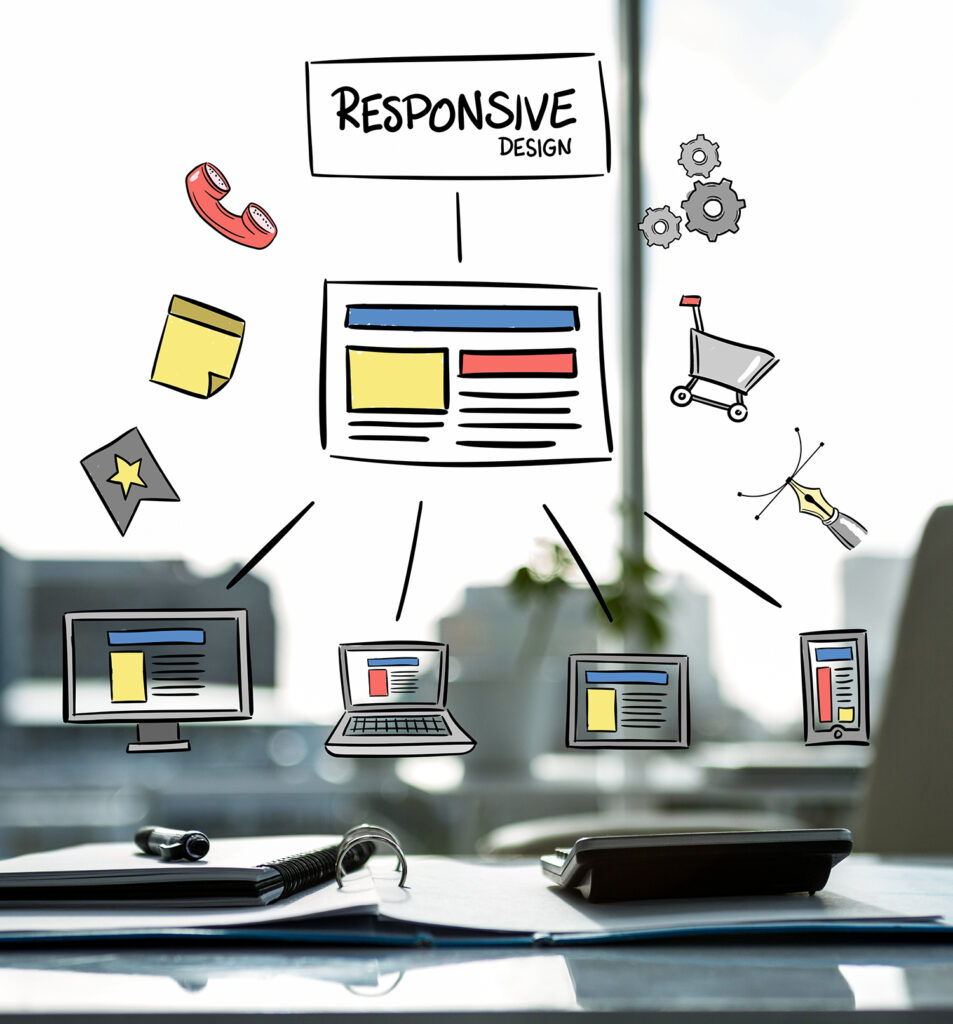
The strongest development partners usually work across several connected areas. Website design, custom development, e-commerce capability, UI/UX planning, content support, hosting setup, maintenance, and digital marketing all influence whether a website performs well in the market. When those functions are disconnected across multiple vendors, delays and accountability gaps often follow.
Why business fit matters more than portfolio size
A large portfolio can be reassuring, but it should not be the main reason you hire a company. What matters more is whether the agency understands your business model, your sales process, and the expectations of your market.
A startup may need speed, flexibility, and room to scale without overspending in phase one. An SME may need stronger brand presentation, lead capture, SEO readiness, and reliable maintenance. A corporation may need structured approvals, tighter compliance, system integration, and dependable project governance. The right website developer company knows that the same package will not suit every client.
This is where many businesses make an expensive mistake. They choose based on price alone, or they select a vendor that is technically capable but commercially disconnected. The result is often a website that looks acceptable yet fails to support actual business operations.
How to evaluate a website developer company
The right evaluation process is not complicated, but it does require asking better questions.
Start with business objectives, not features
Before discussing platform choices or design direction, define what the website must achieve. Is the goal to generate qualified leads, support online sales, improve credibility for tenders, reduce manual inquiries, or centralize customer communication? A dependable agency will ask these questions early because the answers shape the entire project.
If a company jumps straight into quoting pages, banners, and plugins without understanding your commercial objectives, it is treating the website as a product instead of a business tool.
Look at process, not just creativity
Strong execution comes from process. Ask how discovery is handled, how scope is defined, how revisions are managed, how timelines are controlled, and what happens after launch. A polished sales presentation means very little if project delivery is inconsistent.
Business decision-makers usually benefit from a partner that can explain the workflow clearly and take ownership of execution. That is especially valuable when internal teams do not have time to coordinate designers, developers, copywriters, SEO specialists, and hosting providers separately.
Check whether support continues after launch
A website is not finished when it goes live. Content updates, performance checks, security maintenance, backups, plugin monitoring, bug fixes, and occasional upgrades all matter. Without ongoing support, even a well-built website can become slow, outdated, or vulnerable.
This is one of the biggest differences between a short-term vendor and a long-term digital partner. Businesses that expect their website to support growth should treat maintenance as part of the investment, not as an optional extra.
The advantage of an integrated service partner
There is a practical reason many businesses prefer one agency that can manage strategy, development, marketing, hosting, and support together. It reduces fragmentation.
When one vendor designs the site, another hosts it, another handles SEO, and someone else manages ads or business email, accountability becomes blurred. If performance drops or issues arise, each provider may point elsewhere. Time is lost, decisions stall, and internal teams are left managing technical dependencies that should have been coordinated externally.
An integrated website developer company can simplify that structure. The website can be planned with SEO in mind from the start. Hosting can be configured around the actual traffic and performance needs of the site. Lead forms can connect with campaign tracking. Business email, domain management, and maintenance can be handled under the same service relationship. That creates more continuity and usually leads to faster response times.
For businesses that want a centralized digital partner, this model is often more efficient and more cost-effective over time. It also gives management a clearer line of accountability.
Cost matters, but cheap decisions cost more
Every business has a budget. That is reasonable. But choosing a website developer company based on the lowest quote alone often creates hidden costs later.
Low-cost projects may exclude planning, SEO foundations, content structuring, mobile optimization, testing, documentation, post-launch support, or scalable development practices. The site may function on the surface while creating future problems that require rebuilding, patching, or replacing sooner than expected.
That does not mean the most expensive agency is automatically the right one. Higher pricing only makes sense if it is supported by stronger strategy, better execution, broader capability, and more reliable support. The key is value. A competitively priced partner that delivers tailored work, stable project management, and measurable business outcomes is usually the better investment than either the cheapest or the most premium option on paper.
Signs you are speaking to the right company
A serious agency will speak the language of outcomes. It will ask about your customers, your sales pipeline, your positioning, and how success will be measured. It will explain trade-offs honestly. For example, a template-based build may reduce cost and timeline, while custom development may offer stronger flexibility and better alignment with specific workflows. Neither option is automatically better. It depends on the business need.
The right company will also be transparent about scope. Not every business needs a complex custom system. Not every website needs advanced integrations on day one. Good advice is often about sequencing investment properly rather than selling the biggest package available.
This is where an experienced partner stands out. A company such as SWOT, for example, is positioned to support businesses that want more than isolated web development. When strategy, design, development, marketing, cloud services, and ongoing support are aligned under one provider, businesses can move faster with less operational friction.
Questions worth asking before you sign
Ask who will manage the project and who will actually build the site. Ask what is included in content support, revisions, testing, training, and maintenance. Ask whether the website is built for performance, SEO readiness, and mobile usability from the start. Ask what happens if your requirements expand after launch.
Just as important, ask how the agency handles long-term growth. A website that cannot evolve with your business will become a limitation. You want a platform and a partner that can support future campaigns, new service pages, e-commerce expansion, landing pages, integrations, and brand updates without requiring a complete reset.
A website should strengthen business momentum, not create another management problem. The right website developer company helps you build a credible digital presence, support lead generation, and create a more dependable foundation for future marketing and operational growth. Choose the team that understands where your business is going, not just what needs to be designed this month.