



A lead generation website is not judged by how modern it looks in a design presentation. It is judged by whether it produces qualified inquiries, sales conversations, and real business opportunities. For startup founders, SME owners, and marketing managers, that distinction matters because a website that looks impressive but fails to convert is still underperforming.
Many businesses invest in web design as if the project ends at launch. In practice, launch is where commercial accountability begins. If your website is meant to support revenue, then every section, form, page layout, and content decision should help move a visitor toward action.
A lead generation website starts with business intent
The strongest websites are built around a clear commercial objective. That could mean generating consultation requests, quotation inquiries, demo bookings, WhatsApp leads, phone calls, or contact form submissions. Without that focus, websites tend to become broad company brochures that explain everything and persuade very little.
This is where many projects go off track. Stakeholders ask for more pages, more animations, and more information, thinking this will make the business look more established. Sometimes it does. But if the structure becomes too heavy, visitors lose clarity and momentum. A lead generation website needs to balance credibility with direction.
That means asking practical questions early. Who is the target customer? What problem are they trying to solve? What proof will help them trust your business? What action do you want them to take next? When those answers are defined from the start, the website becomes a sales asset rather than a digital placeholder.
Why traffic alone is not the metric that matters
Businesses often talk about website traffic as if more visits automatically mean better results. Traffic has value, but only when the visitors are relevant and the site is designed to convert them. Ten qualified visitors can be more useful than one thousand casual visits with no buying intent.
This is why performance should be measured deeper than pageviews. A commercially effective website tracks inquiry volume, lead quality, source performance, landing page conversion rates, and friction points in the user journey. If people are arriving but not contacting you, the problem may not be visibility. It may be messaging, trust, offer clarity, or user experience.
In some cases, the issue is timing. A visitor may be interested but not ready to speak yet. That is why good lead generation websites support both immediate action and lower-commitment engagement. Some users want to request a proposal now. Others want to read service details, review your credentials, and return later. Your website should accommodate both behaviors without losing focus.
The pages that carry the most conversion weight
Not every page on a business website contributes equally to lead generation. In most cases, the home page, service pages, landing pages, about page, and contact page carry the strongest conversion responsibility.
The home page should quickly communicate what you do, who you do it for, and why your business is credible. If a visitor cannot understand that within a few seconds, the site is creating avoidable friction. Clear headlines, relevant service summaries, and strong calls to action matter more than decorative copy.
Service pages often do the real selling. This is where decision-makers look for specifics. They want to understand scope, process, outcomes, and fit. Vague descriptions weaken confidence. Strong service pages explain the business problem, the solution, the expected value, and the next step.
The about page also plays a bigger role than many businesses expect. For higher-value services, buyers want reassurance that the company behind the website is established, reliable, and commercially serious. That does not mean writing a long brand story for the sake of it. It means showing capability, experience, operational stability, and support.
The contact page should remove hesitation, not create it. If users must search for the right way to reach you, or if the form asks for too much too soon, response rates will drop. Simplicity usually performs better.
What actually improves conversion rates
There is no single feature that turns an average website into a high-performing one. Results usually come from a combination of decisions that make the website easier to trust and easier to act on.
Messaging is the first factor. Many websites describe the company from the company’s perspective rather than the customer’s. Buyers are not primarily looking for your internal story. They want to know whether you understand their problem and can solve it efficiently. Strong copy is specific, commercially relevant, and clear about outcomes.
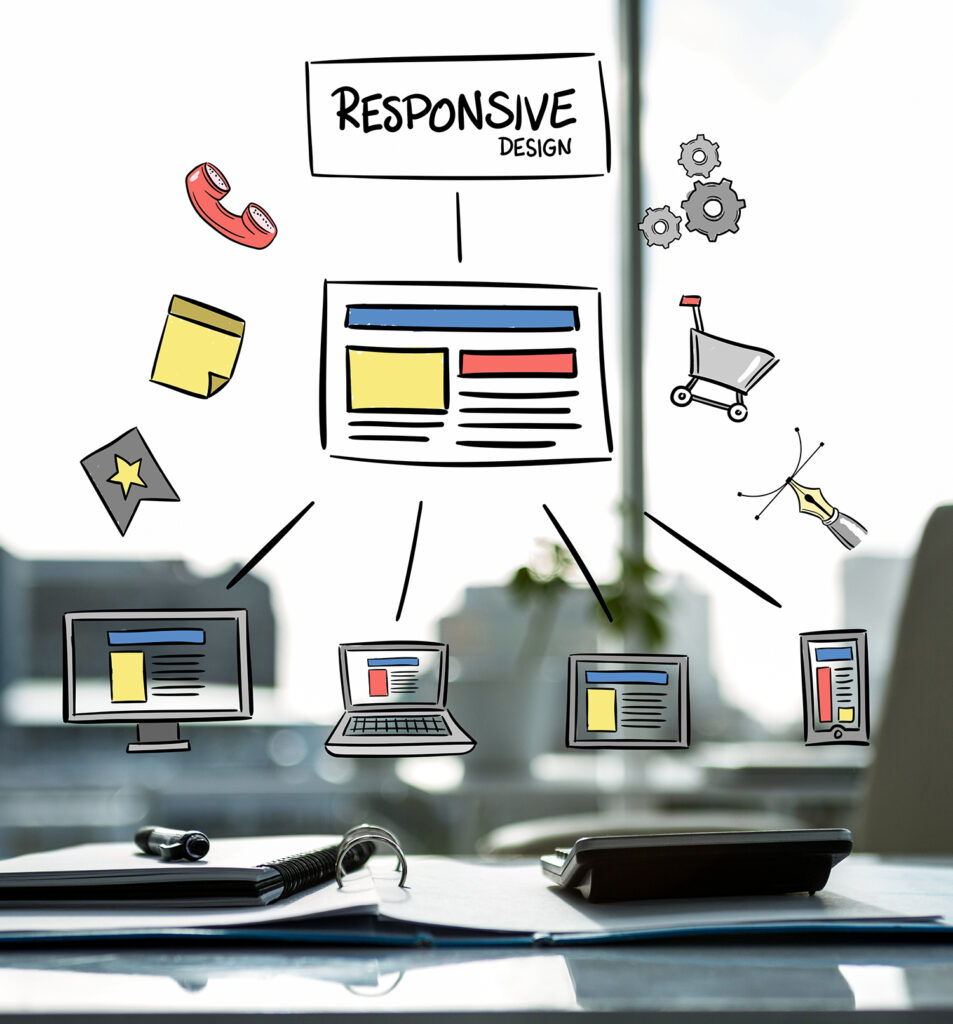
User experience is the second factor. If the site is slow, confusing, or difficult to use on mobile, conversion suffers. This is especially important for businesses running paid campaigns, local search traffic, or social traffic where users often arrive on mobile devices first. Navigation should be straightforward, content should be easy to scan, and calls to action should be visible without feeling excessive.
Trust signals are the third factor. Depending on the business, this can include client logos, testimonials, case studies, certifications, years of experience, project counts, or clearly presented company information. The right trust elements reduce uncertainty. The wrong ones can feel generic. It depends on your audience and sales cycle.
Offer structure also matters. Some businesses ask for a full commitment too early. If your service is high-value or complex, a visitor may be more likely to respond to a free consultation, assessment, or discovery call than a direct sales push. The right call to action should match the buyer’s level of readiness.
The role of SEO, ads, and campaign traffic
A lead generation website does not operate in isolation. It performs best when connected to a broader acquisition strategy. Search engine optimization brings long-term visibility. Google Ads can capture active buying intent faster. Social campaigns can support awareness and retargeting. Email and WhatsApp follow-up can help move interested prospects closer to conversion.
This is why website performance should never be treated as a separate discussion from marketing performance. If your campaigns are driving users to weak landing pages, spend efficiency declines. If SEO brings traffic to pages with poor messaging, rankings may improve while inquiries stay flat. The website and the traffic strategy need to be aligned.
For many businesses, this is where working with a single digital partner creates operational advantages. Instead of separating design, development, hosting, SEO, paid ads, and ongoing support across multiple vendors, there is stronger accountability when the website and marketing ecosystem are managed as one commercial system.
Why design alone is not enough
Good design matters because credibility matters. A dated or inconsistent website can damage trust before a conversation begins. But design without conversion strategy often produces polished underperformance.
A business website should not be overloaded with visual effects that distract from action. Nor should it be reduced to generic templates that fail to reflect the company’s positioning. The right standard is not just visual attractiveness. It is commercial effectiveness.
That usually requires input beyond design. Development affects speed and scalability. UX affects usability. Copy affects persuasion. SEO affects discoverability. Hosting affects reliability. Maintenance affects long-term performance and security. A lead generation website works best when these disciplines support the same business objective.
What decision-makers should ask before approving a website project
Before signing off on a website build or redesign, business stakeholders should ask a few direct questions. What is the primary conversion goal? Which pages are responsible for producing inquiries? How will leads be tracked? What trust elements are being included? What happens after launch to improve results?
Those questions help shift the conversation from aesthetics to outcomes. They also expose whether the project is being approached strategically or just being assembled page by page.
A reliable agency should be able to explain not only how the website will look, but how it will support lead quality, campaign performance, and long-term growth. That is the difference between a vendor that builds pages and a partner that understands digital performance. At SWOT, that distinction shapes how serious website projects should be approached.
The best time to think about lead generation is not after your website goes live. It is while the strategy, structure, and user journey are still being built. A website should earn its place in your business by creating opportunities, not simply occupying a domain.