


An engineering firm can have decades of project experience, certified specialists, and strong client relationships, yet still lose opportunities because its website does not explain its value clearly. Engineering website development is not simply about producing an attractive corporate site. It is about turning technical capability into buyer confidence, qualified inquiries, and a digital platform that supports long sales cycles.
For engineering businesses, a website must satisfy several audiences at once. Procurement teams need evidence of capability. Project managers want relevant technical details. Senior decision-makers want reassurance that the firm is credible, responsive, and commercially reliable. A successful site organizes that information without making visitors work to find it.
What Engineering Website Development Must Achieve
A general business website may focus primarily on brand awareness or direct online sales. An engineering website has a different responsibility. It must communicate complex services in a way that is accurate enough for technical stakeholders and clear enough for non-technical decision-makers.
That begins with positioning. Visitors should understand, within moments, what the company does, which industries it serves, where it operates, and why it is qualified for the work. Vague claims such as “quality engineering solutions” rarely create confidence on their own. Specific service categories, project sectors, compliance capabilities, certifications, and delivery experience are far more persuasive.
The website also needs to support the way engineering projects are purchased. Many prospects will not submit an inquiry during their first visit. They may review case studies, compare vendors, share a company profile internally, or return after a tender opportunity appears. Each page should therefore build credibility and move the visitor closer to a productive conversation.
Build Around Commercial Priorities, Not Just Pages
Before design and development begin, the business should define what the website is expected to deliver. For one company, the priority may be generating industrial project inquiries. For another, it may be attracting overseas distributors, supporting recruitment, or strengthening credibility for tender submissions.
This direction affects every decision that follows. A company focused on lead generation needs focused service pages, clear inquiry paths, and forms that capture useful project information. A firm targeting major contracts may need a stronger project portfolio, detailed credentials, downloadable corporate materials, and evidence of quality management processes.
A useful website plan usually connects four business areas: services, industries, proof, and conversion. Services explain what the company provides. Industry pages show contextual understanding of sectors such as construction, manufacturing, oil and gas, utilities, or infrastructure. Proof validates the claims through completed work, client sectors, qualifications, and team experience. Conversion gives interested visitors a direct way to request a discussion, quotation, or technical consultation.
The trade-off is depth versus usability. A highly technical company may be tempted to place every specification, capability statement, and document online. That can be valuable for certain visitors, but an overloaded site can obscure the main message. The right approach depends on the buying process and the information prospective clients genuinely need before contacting the business.
Service Pages Should Answer Buyer Questions
Each core service deserves its own well-structured page. Instead of grouping every capability into a short company overview, explain the scope of work, common applications, relevant sectors, process, quality controls, and expected project outcomes.
For example, a structural engineering page may explain design capability, site assessment, compliance requirements, and coordination with architects or contractors. A mechanical engineering page may cover equipment design, fabrication support, maintenance planning, or system integration. The content should be commercially clear without making unsupported technical promises.
Strong service pages also help search visibility. When prospective clients search for a specialist service, they should reach a page that directly addresses that need rather than a generic homepage. This improves relevance for both search engines and human visitors.
Show Proof Where It Matters
Engineering buyers are cautious for good reason. Project delays, safety concerns, non-compliance, and poor coordination can create serious financial consequences. Your website should reduce uncertainty by showing evidence of how the business operates.
Project case studies are particularly valuable. They do not need to disclose confidential information to be effective. A concise case study can identify the client sector, project challenge, scope of work, delivery approach, and measurable result. Even where exact figures cannot be published, practical details such as project scale, location, timeline, or technical constraints can demonstrate experience.
Credentials should be easy to locate and kept current. These may include professional registrations, ISO certifications, safety standards, industry memberships, awards, partner relationships, and relevant licenses. Avoid treating these as decorative logos. Add short explanations of why each credential matters to the client’s project.
Team profiles can also build trust, especially for consultancies and specialist engineering firms. Highlight leadership experience, disciplines, qualifications, and relevant expertise. The objective is not to publish every employee’s resume. It is to show that capable people will be responsible for the work.
Design for Clarity and Technical Confidence
Engineering website design should look professional, but visual style must serve the message. Overly abstract graphics and generic stock images can make a technically capable business appear interchangeable with competitors. Where possible, use original project photography, site imagery, equipment visuals, diagrams, and team photographs that reflect the actual operation.
A clean interface gives technical content room to breathe. Use clear headings, short sections, purposeful visuals, and consistent calls to action. Visitors should be able to move from a service overview to relevant project proof and then to an inquiry option without confusion.
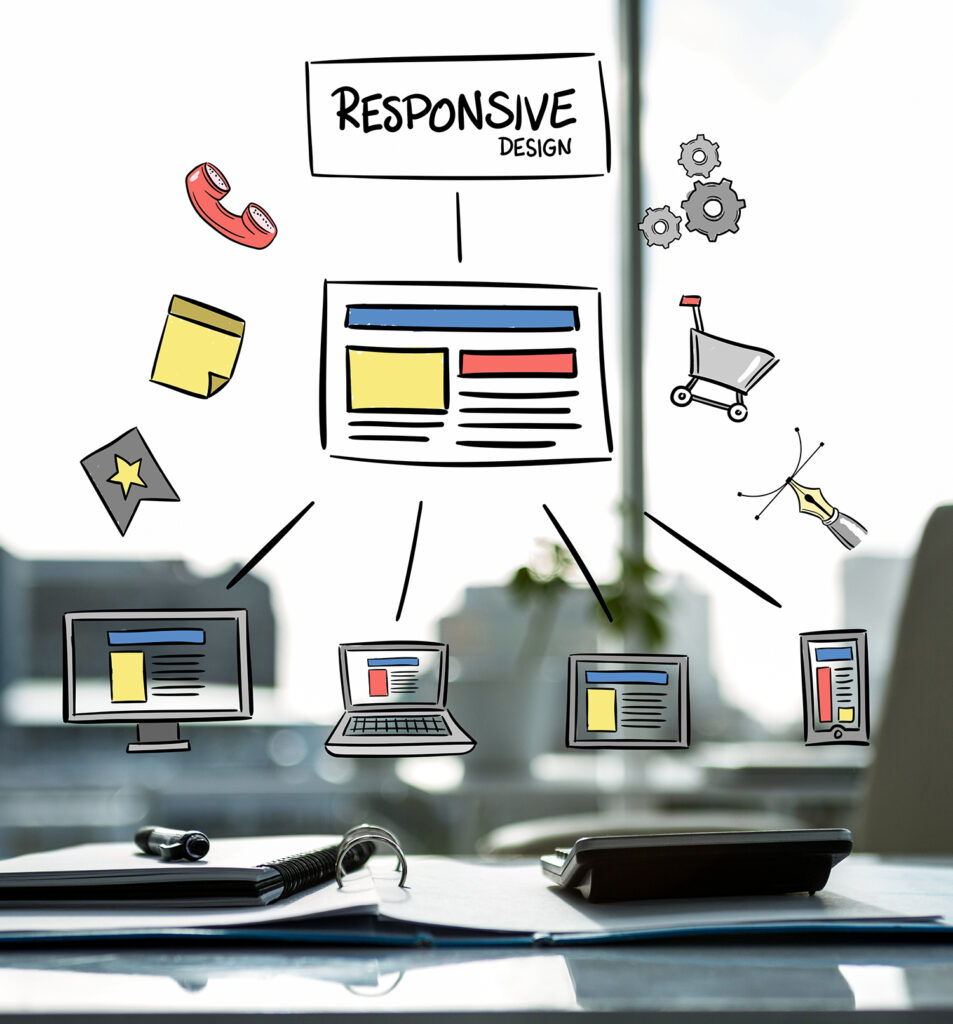
Mobile performance is not optional. Decision-makers, site personnel, and procurement teams often review suppliers on phones or tablets between meetings. If key information is slow to load, difficult to read, or hidden behind complicated navigation, the business loses credibility before a conversation begins.
Accessibility is equally practical. Readable text, sufficient color contrast, logical navigation, and properly labeled forms improve usability for all visitors. These details also signal that the company takes professional standards seriously.
Technical Development Protects Performance
The strongest visual design cannot compensate for weak development. Engineering websites often contain project galleries, technical documents, forms, multiple service pages, and integrations with customer relationship management or email systems. The underlying build must be secure, stable, and easy to maintain.
Development decisions should reflect the company’s operational needs. A simple brochure website may be best served by a well-managed content platform that allows internal teams to update project pages and news. A larger organization may need user roles, multilingual content, document libraries, recruitment integrations, or connection to internal business systems.
Security deserves early attention. Inquiry forms can attract spam and malicious submissions, while outdated software can create avoidable risk. Secure hosting, SSL protection, regular updates, backups, malware monitoring, and controlled access should be part of the website plan, not an afterthought.
Speed is also a commercial issue. Large uncompressed images, unnecessary scripts, and poorly configured hosting can slow the website down. Faster pages create a better experience, support search performance, and make it easier for prospects to access important information when they need it.
Make Inquiry Paths Useful for Sales Teams
“Contact us” is necessary, but it is rarely enough for a high-value engineering sale. The site should provide clear, relevant prompts such as requesting a quotation, discussing a project requirement, arranging a site consultation, or submitting tender-related inquiries.
The form itself should capture only the information needed to qualify the lead. Company name, contact details, service requirement, project location, expected timeline, and a brief scope description are often more useful than a long, generic message field. If the form is too demanding, prospects may abandon it. If it asks too little, the sales team spends time chasing basic information.
Response handling matters as much as form design. An inquiry that sits unanswered creates the wrong impression, particularly when the client has an urgent project requirement. Set internal ownership, response expectations, and notification processes before launch.
Keep the Website Current After Launch
Engineering capabilities evolve. New projects are completed, certifications are renewed, sectors change, and services expand. A website that remains untouched for years can make an active, capable company look inactive.
Ongoing maintenance should include software updates, security checks, backup verification, performance monitoring, and periodic content reviews. Commercial updates matter too. Add meaningful new project examples, refresh service pages as capabilities change, and review inquiry data to see which pages are producing serious opportunities.
SWOT approaches website delivery as part of a wider digital operation, combining strategy, design, development, hosting, and ongoing support so businesses are not left coordinating separate providers after launch.
A well-planned engineering website gives your team a dependable asset for every sales conversation, tender opportunity, and growth initiative. Start with the questions your best prospects ask before they engage, then build a digital experience that answers them with clarity, proof, and professional confidence.