



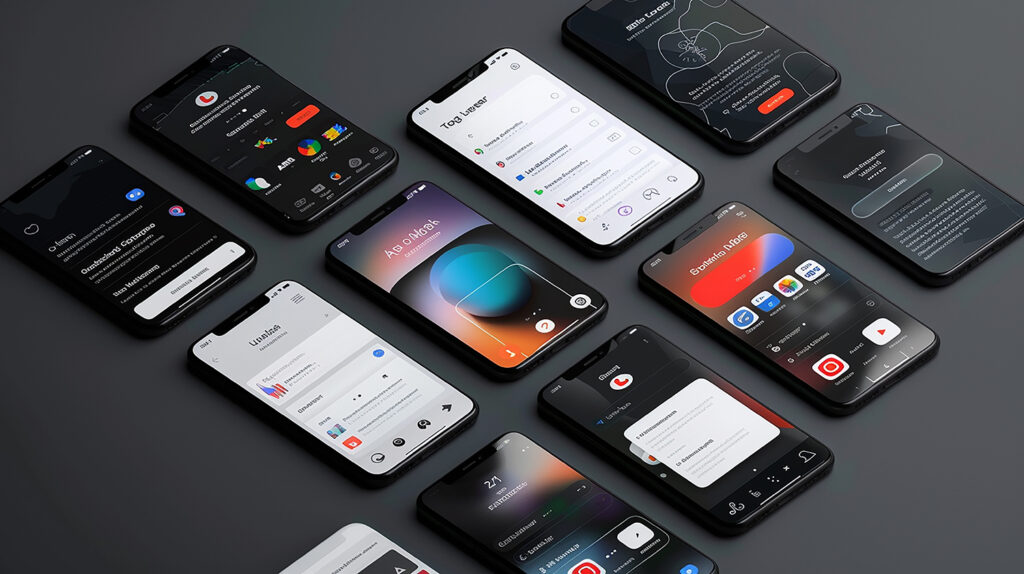
A website that looks modern but frustrates users is still underperforming. That is the core reason why invest in UI UX design has become a serious business question, not just a design preference. For companies that rely on websites, e-commerce, portals, or mobile apps to generate leads and support operations, UI/UX directly affects revenue, trust, and efficiency.
Many business owners first notice the problem through symptoms. Traffic is coming in, but inquiries are low. Users reach the checkout page, but sales drop off. Staff spend too much time answering simple questions because customers cannot find what they need. In these cases, the issue is often not visibility alone. It is how people experience the platform once they arrive.
Why invest in UI UX design instead of only development?
Development makes a digital product function. UI/UX makes it usable, clear, and commercially effective. A business can have a technically sound website and still lose prospects because the navigation is confusing, the forms are too long, the messaging hierarchy is weak, or the mobile experience feels awkward.
That distinction matters because users do not separate design from performance. They judge the entire brand experience in seconds. If the interface feels inconsistent or the journey feels difficult, confidence drops quickly. That affects whether they contact your team, complete a purchase, request a quotation, or return again.
For decision-makers, UI/UX is best understood as an investment in business outcomes. It helps reduce friction between customer intent and customer action. The less effort a user needs to take the next step, the stronger your digital platform performs.
Good UI/UX increases conversions
Most companies do not need more clicks alone. They need more qualified actions from existing traffic. Strong UI/UX helps by guiding users toward the right decisions with less confusion.
This can show up in simple but meaningful ways. A clearer menu structure helps users locate services faster. Better page hierarchy helps them understand your value proposition without scrolling aimlessly. Cleaner forms reduce abandonment. Stronger mobile layouts make it easier for users to submit inquiries during short browsing sessions.
Conversion improvement is often the most immediate return on UI/UX investment because even small friction points create measurable losses. If a pricing page is unclear, a call-to-action is buried, or a checkout flow feels complicated, users hesitate. That hesitation has a cost.
The trade-off is that design changes should not be based on visual taste alone. A page can look more attractive after a redesign but perform worse if key content becomes harder to find. Effective UI/UX balances brand presentation with user behavior and commercial intent.
Better experience builds trust faster
Trust is one of the most overlooked reasons why invest in UI UX design makes commercial sense. Businesses often focus on what they want to say, while users focus on whether the platform feels credible enough to act on.
A polished interface signals professionalism. Consistent layouts, readable typography, intuitive navigation, and a clear content structure create confidence. Users may not describe these elements in technical terms, but they feel the difference immediately. A confusing website raises concerns about service quality, responsiveness, and reliability.
This is especially important for SMEs, service providers, and B2B companies where the decision cycle involves more evaluation. A prospect comparing several vendors will often use the website experience as part of that judgment. If your platform feels easier to understand and more dependable, you start the sales conversation from a stronger position.
Trust also matters internally. Corporate stakeholders and marketing teams need digital assets they can confidently present to management, clients, or partners. A well-designed platform supports brand credibility beyond marketing alone.
UI/UX supports SEO and paid traffic performance
Businesses regularly invest in SEO, Google Ads, and social campaigns to drive visitors to digital platforms. But traffic generation and user experience are closely connected. If visitors arrive and struggle to navigate, marketing efficiency drops.
UI/UX does not replace SEO, but it strengthens the value of the traffic SEO brings. Search visibility helps people find you. User experience helps them stay, engage, and convert. The same applies to paid campaigns. If you are paying for each click, every avoidable point of friction on the landing page increases acquisition cost.
This is where integrated execution matters. A campaign may bring in the right audience, but if the site structure, mobile responsiveness, or page flow is weak, performance will stall. Businesses that treat design, development, and marketing as separate silos often end up fixing issues reactively. A more strategic approach looks at the full path from ad impression or search result to conversion.
It reduces operational friction, not just customer friction
UI/UX is often discussed as a customer-facing discipline, but it also affects internal efficiency. This is particularly relevant for businesses with service forms, booking systems, customer dashboards, member portals, and operational workflows.
When users cannot complete tasks independently, your staff absorbs the burden. Sales teams answer repetitive questions. Admin teams manually correct incomplete submissions. Customer support spends time guiding users through basic processes. These are avoidable costs.
A well-structured interface can reduce errors, shorten task completion time, and improve data quality. That means fewer interruptions for your team and a more efficient digital operation overall. For companies handling growth, this matters because poor user experience rarely stays contained within the website. It spills into support, sales, and administration.
Why invest in UI UX design for mobile-first behavior?
For many businesses, most traffic now comes from mobile devices. Yet many websites are still designed desktop-first in practice, even if they are technically responsive. That gap creates underperformance.
A mobile-friendly site is not the same as a mobile-optimized experience. Buttons may fit the screen, but users may still struggle with spacing, reading flow, form completion, sticky elements, or slow page interactions. On mobile, tolerance for friction is lower because users are often multitasking, browsing quickly, or comparing options on the go.
This is one reason why UI/UX deserves strategic attention early in a project. Mobile behavior should shape layout priorities, content hierarchy, and user journeys from the start. Retrofitting these decisions later usually costs more and delivers weaker results.
Strong UI/UX protects long-term digital investment
A website or app is not a one-time visual asset. It is part of your business infrastructure. If it is poorly planned, every future update becomes more difficult. New campaigns are harder to launch, content grows messy, and design consistency breaks down over time.
Investing in UI/UX early creates a stronger foundation for scaling. It supports cleaner information architecture, clearer user flows, and more consistent design systems. That makes future enhancements easier, whether you are adding services, expanding e-commerce functionality, or integrating marketing tools.
There is an important balance here. Not every business needs an extensive UI/UX research phase or a highly customized product design process. A startup launching quickly may need a leaner scope than an enterprise platform with multiple user roles. The right investment level depends on complexity, business goals, and growth stage.
What should remain consistent is the principle: design decisions should serve measurable business outcomes, not personal preference.
The real cost of ignoring UX problems
Some businesses delay UI/UX work because the platform is still functioning. But functioning is not the same as performing. The cost of poor UX often appears gradually through lower conversions, higher bounce rates, weaker trust, rising support demands, and reduced campaign efficiency.
These losses are easy to underestimate because they do not always appear as a single visible failure. Instead, they show up as missed opportunities across the customer journey. A prospect leaves without inquiring. A returning customer postpones a purchase. A lead form is abandoned halfway through. Over time, these small losses become expensive.
That is why UI/UX should be treated as part of commercial planning, not decorative finishing. Businesses that want stronger digital results need platforms that are easy to use, easy to trust, and built around real user behavior.
For companies evaluating their next website, app, or redesign, the better question is not whether UI/UX matters. It is how much growth, efficiency, and credibility you are willing to leave on the table without it. A capable partner such as SWOT can help align design, development, marketing, and support so your digital platform works as a business asset, not just an online presence.
The strongest digital investments are rarely the loudest. They are the ones that quietly remove friction, strengthen trust, and help customers move forward with confidence.