


A business website starts affecting sales long before a prospect fills out a form. It shapes credibility, answers objections, supports marketing campaigns, and determines how easily customers can act. That is why custom website development matters for companies that need more than a basic online presence.
Template websites can be useful at the earliest stage of a business. They are faster to launch and usually cost less upfront. But once a company needs stronger branding, better lead flow, system integration, multilingual support, or a tailored customer journey, those shortcuts often become restrictions.
For decision-makers, the question is not whether a website should look modern. The more practical question is whether the website can support commercial goals without creating friction for marketing, operations, or future growth.
What custom website development actually means
Custom website development is the process of planning, designing, and building a website around the specific requirements of a business rather than forcing the business into a fixed template or pre-built structure. That includes visual design, page architecture, features, content flow, integrations, performance considerations, and administrative controls.
In practice, this means the website is shaped by how your company sells, how your customers evaluate options, and how your internal team needs to manage content or inquiries. A manufacturer may need product catalog structures that differ from an education provider. A corporate group may need multiple service lines, career pages, investor content, and role-based approvals. An e-commerce business may need custom checkout logic, product filtering, delivery rules, and marketing tracking.
The value is not customization for its own sake. The value is fit.
Why businesses outgrow off-the-shelf websites
Many businesses begin with a simple website because speed is the priority. That is reasonable. The problem appears later, when marketing requirements become more demanding and the website cannot keep up.
A common issue is layout limitation. Templates often make different companies look structurally similar, which weakens brand distinction. Another issue is functionality. As soon as you need CRM integration, custom lead routing, gated content, booking workflows, multilingual architecture, or specialized forms, workarounds start piling up.
There is also the issue of performance. Some pre-built themes carry unnecessary code, excessive plugins, and bloated features that slow the site down. That affects user experience, conversion rates, and search visibility.
None of this means templates are always wrong. For a microbusiness with simple needs, they may be enough. But for SMEs and growing brands, the cost of compromise can become higher than the cost of building properly.
The business case for custom website development
A custom-built website gives a company better control over how it is presented and how users move through the site. That control supports measurable business outcomes.
First, it improves brand credibility. A website that reflects your actual positioning, not a generic framework, helps customers see a more established and reliable business. That matters in competitive sectors where trust is won quickly or lost quickly.
Second, it supports conversion strategy. Different businesses need different paths to action. Some need quotation forms, some need consultation bookings, some need distributor inquiries, and some need online purchases. Custom development allows those journeys to be planned with intent.
Third, it makes integration easier. Websites rarely operate alone. They connect with email tools, analytics platforms, advertising channels, payment systems, cloud services, customer databases, and internal workflows. A tailored build is better positioned to support that wider digital environment.
Fourth, it improves scalability. If your website needs to expand into more services, more markets, or more campaigns later, a custom structure gives you a stronger foundation.
Where custom development creates the most value
Not every page needs advanced engineering, but certain business situations benefit strongly from a custom approach.
Companies with multiple services often need clearer information architecture. Visitors should understand what the business offers without confusion, especially when the audience includes different buyer types. A custom build helps organize this in a way that supports both usability and lead generation.
Businesses investing in SEO and paid campaigns also benefit. If traffic is being driven to the website through Google Ads, social campaigns, or organic search, landing page flexibility becomes important. You need pages that are built around specific intent, not whatever the template allows.
E-commerce is another obvious case. Product logic, filtering, promotions, inventory rules, customer groups, and checkout experience all affect revenue. Even when a standard commerce platform is used, the surrounding experience often needs custom development to perform properly.
Corporate and regulated sectors may require higher standards for approval workflows, hosting arrangements, form handling, and data considerations. Here, convenience matters less than reliability and control.
What a strong custom website development process looks like
The best results usually come from a structured process, not rushed production. A dependable agency starts by understanding business objectives before touching design or code.
That means defining target users, key actions, website scope, content requirements, system dependencies, and performance expectations. It also means deciding how success will be measured. A website built for lead generation should be assessed differently from a website built for recruitment or product education.
After strategy, the focus moves to user experience and content structure. This stage is critical because many website problems are not visual problems. They are structural problems. If users cannot find information or do not understand the next step, attractive design will not fix the issue.
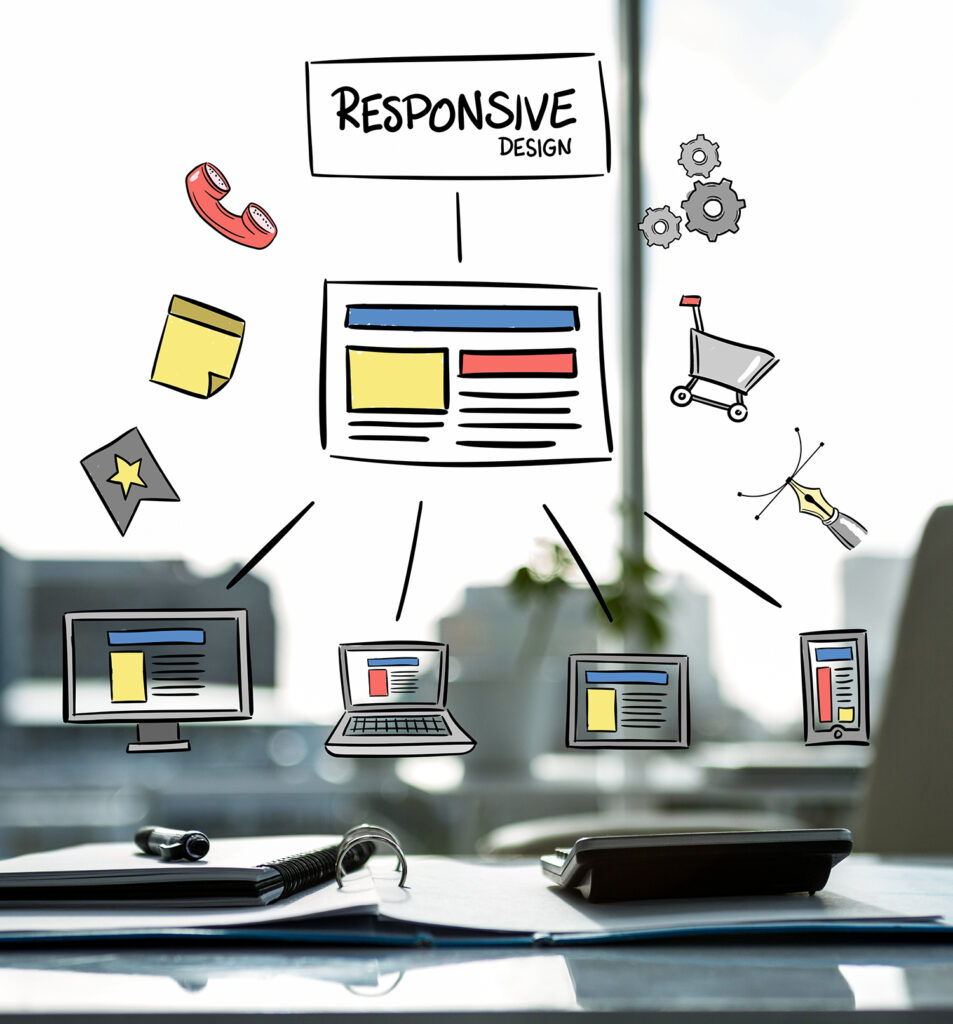
Design should then support the brand and the intended user journey. Development follows with attention to responsiveness, speed, security, maintainability, and administrative usability. Finally, testing should cover devices, browsers, form logic, tracking, and core functional paths before launch.
Post-launch support matters as much as the build. Businesses often underestimate the need for ongoing updates, backups, monitoring, content changes, and technical maintenance. A website is an operational asset, not a one-time file delivery.
Custom websites and digital growth are connected
A website should not be treated as a standalone design exercise. It sits at the center of digital marketing, brand communication, and business operations.
If you are running SEO, the site structure, page speed, metadata control, and content architecture directly affect campaign effectiveness. If you are using paid advertising, the landing experience affects cost efficiency and lead quality. If your sales team follows up on website inquiries, form logic and tracking influence how quickly opportunities are handled.
This is where working with a single partner can create practical advantages. When website development, design, hosting, maintenance, and performance marketing are aligned, decision-making becomes faster and accountability becomes clearer. For businesses that do not want to coordinate multiple vendors, that matters.
A provider such as SWOT can support this more effectively because the website is not treated as an isolated project. It is developed as part of a wider commercial system that includes visibility, lead generation, infrastructure, and long-term support.
How to know if your business needs a custom build
The clearest sign is when your current website creates workarounds instead of helping the business move faster. If your team struggles to update content, if campaigns require technical compromises, if the website does not reflect your brand properly, or if basic integrations are difficult, the site may already be limiting growth.
Another sign is when business complexity increases. New service divisions, multiple audiences, regional targeting, recruitment demands, or expanded marketing activity usually require a more intentional platform.
Budget is still a fair concern. Custom development costs more than basic setup, and not every business needs the same level of sophistication. The right approach depends on your goals, timeline, operational needs, and expected return. A smaller custom scope can still be the smarter investment if it addresses the functions that directly affect revenue or efficiency.
The better question is not whether custom development is cheaper. It is whether a generic solution will cost more over time through missed conversions, redesigns, patchwork fixes, and platform limitations.
Choosing the right development partner
Technical skill alone is not enough. Business decision-makers need a partner that understands commercial priorities, communicates clearly, and delivers reliably.
A strong agency should be able to explain why a feature is needed, where trade-offs exist, and how the website will support measurable outcomes. It should also be able to manage the surrounding pieces, whether that includes UI/UX, content guidance, hosting, maintenance, or campaign readiness.
The most valuable partner is usually the one that can translate business requirements into digital execution without creating unnecessary complexity. That reduces risk, shortens decision cycles, and gives leadership teams more confidence in the investment.
A well-built website does more than present your company online. It gives your business a stronger platform to market, sell, support, and grow with fewer limitations over time. If your current site feels like a placeholder for a bigger plan, that is often the clearest sign it is time to build with purpose.